
Understanding Soft Continuum Robotics: How Continuous Bodies Reshape Robotic Motion Control
Robotics has come a long way, from the rigid, clunky machines of yesterday to the sophisticated marvels we see today. But there’s a fascinating new frontier emerging that’s changing everything we thought we knew about robot movement: soft continuum robotics. Imagine a robot that moves like an elephant’s trunk or an octopus’s arm – fluid, flexible, and incredibly adaptive. That’s the essence of what we’re exploring here.
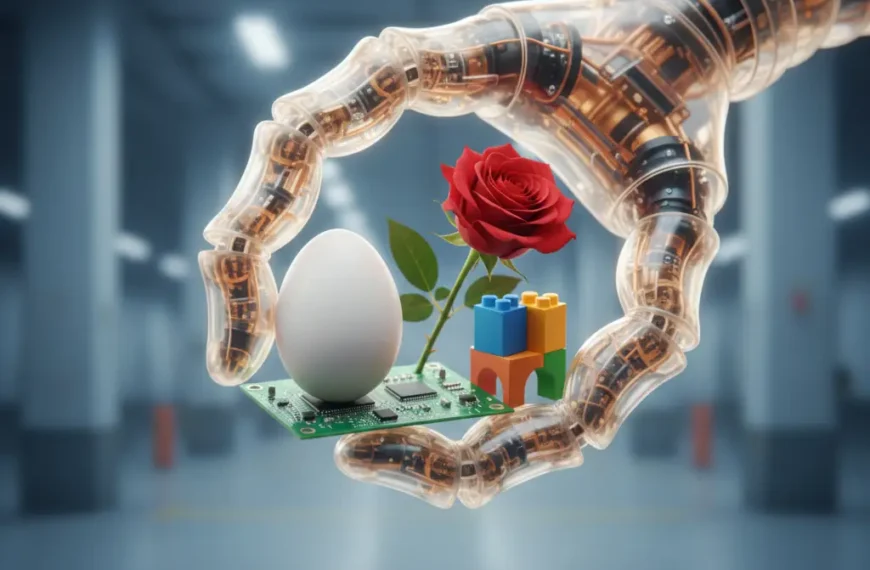
Unlike traditional robots with their distinct, jointed parts, soft continuum robots boast a continuous, flexible structure. Think of it less like a skeleton with individual bones and more like a muscle, able to bend and twist in countless ways. This fundamental difference isn’t just a design choice; it completely redefines how we approach motion control and what robots can achieve.
What Exactly Are Soft Continuum Robots?
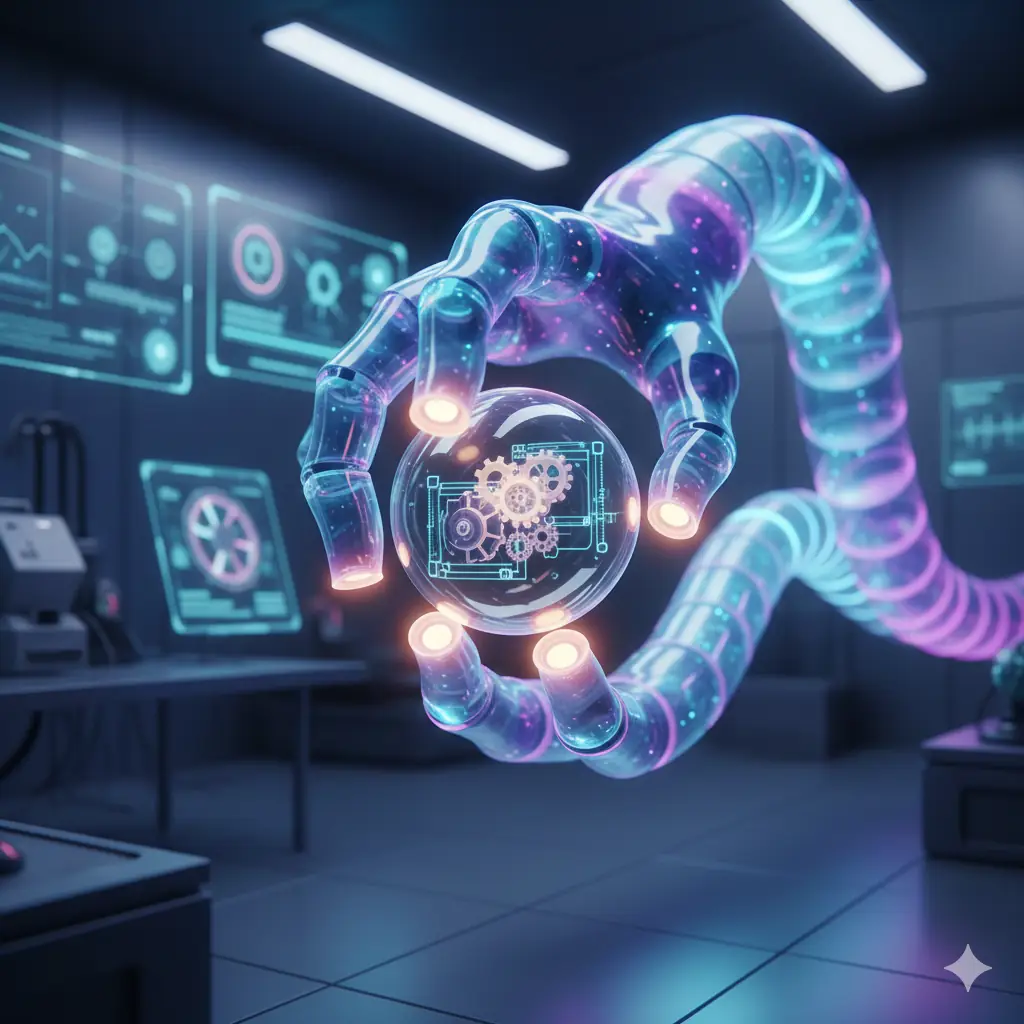
At its heart, a soft continuum robot is a machine made primarily from compliant (soft or easily deformable) materials, allowing it to move and interact with its environment in ways that rigid robots simply cannot. Instead of hinges and gears, these robots often use internal actuators, like pneumatic muscles or smart materials, to change their shape.
Consider the difference between a human arm and a robotic arm on an assembly line. The human arm, with its muscles and tendons, can perform an infinite variety of smooth, flowing movements. A traditional robotic arm, while precise, is limited by the fixed axes of its joints. Soft continuum robots aim to bridge that gap, mimicking the natural flexibility of biological systems.
The Continuous Body Advantage
The ‘continuum’ aspect means there are no discrete joints. Every part of the robot’s body can potentially contribute to its movement and manipulation. This gives them an extraordinary degree of freedom, allowing them to navigate complex environments, grasp delicate objects, and even squeeze through tight spaces that would be impossible for their rigid counterparts.
This continuous nature also has a significant impact on safety. Because they are soft, these robots are inherently safer for human interaction. Imagine a soft robot arm brushing against a person versus a hard, metal one – the difference in impact is substantial, making them ideal for collaborative tasks alongside humans.
Rethinking Motion Control
When you remove rigid joints, the traditional methods of controlling robot movement go right out the window. For a conventional robot, you calculate angles for each joint to achieve a desired position. For a soft continuum robot, it’s a much more fluid and often more complex challenge.
Instead of controlling individual joints, engineers focus on controlling the robot’s overall shape or curvature. This often involves applying pressure to different internal chambers, pulling on embedded tendons, or activating shape-memory alloys. It’s less about precise angular kinematics and more about continuous deformation.
Advanced Control Strategies
Scientists and engineers are developing innovative control strategies for these robots. One common approach involves using mathematical models that describe how the robot’s shape changes in response to control inputs. This can be quite intricate, often relying on principles from continuum mechanics.
Machine learning and artificial intelligence are also playing a huge role. By training algorithms with data from the robot’s movements, these systems can learn to predict and control the complex deformations needed for specific tasks. This allows for more intuitive and adaptive control, especially in unpredictable environments.
Where Soft Continuum Robots Shine
The unique properties of soft continuum robots open doors to applications previously thought impossible for automation. Their ability to conform, adapt, and operate safely makes them invaluable in several key areas:
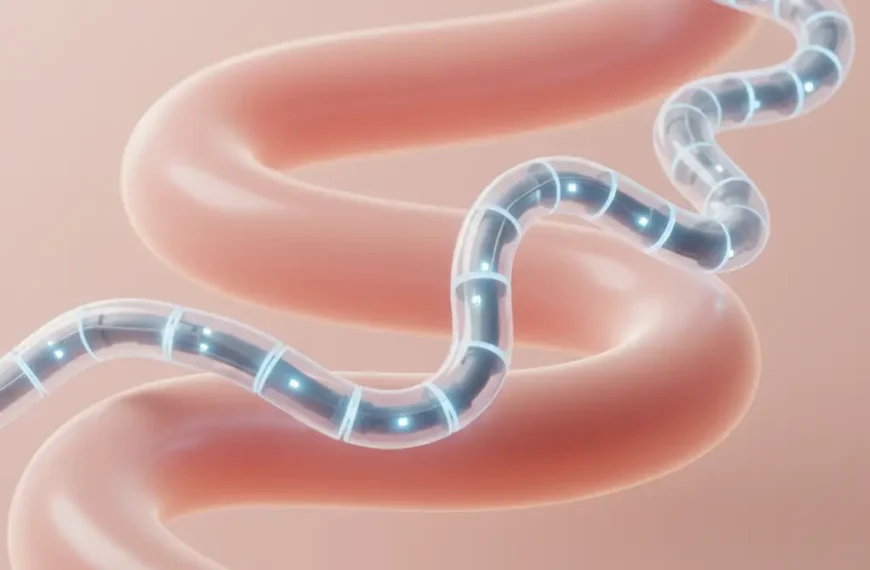
- Medical Applications: Imagine surgical robots that can navigate the delicate, winding pathways inside the human body without causing damage, or assistive devices that gently interact with patients.
- Exploration: For inspecting pipelines, exploring underwater environments, or even extraterrestrial surfaces, soft robots can squeeze into confined spaces and withstand impacts better than rigid machines.
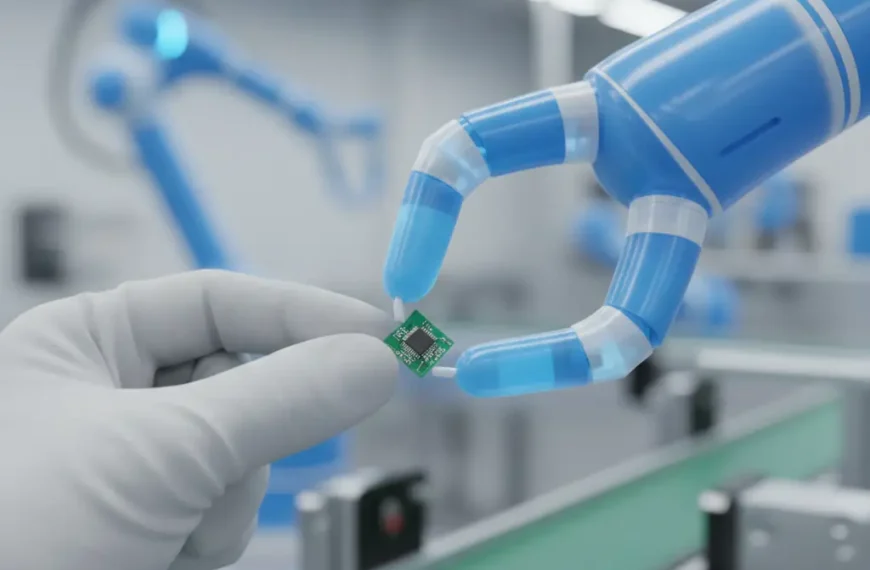
- Manufacturing & Logistics: Handling fragile items on an assembly line or manipulating irregularly shaped objects becomes much simpler and safer with a robot that can gently conform to the object’s shape.
- Search and Rescue: Their ability to snake through rubble and tight spaces makes them ideal for locating survivors in disaster zones, minimizing further risk.
Here’s a quick look at some pros and cons:
| Pros | Cons |
|---|---|
| High adaptability and flexibility | Complex control algorithms needed |
| Inherently safe for human interaction | Precise positioning can be challenging |
| Navigate complex, confined spaces | Slower speeds compared to rigid robots |
| Resilient to impact and damage | Limited payload capacity in some designs |
The Future is Flexible
While still a relatively young field, soft continuum robotics is advancing rapidly. Researchers are constantly refining materials, actuation methods, and, crucially, the motion control systems that bring these robots to life. We’re moving towards a future where robots are not just tools, but more like versatile, adaptive partners.
Think about how nature solves complex movement problems: through elegant, continuous deformation rather than rigid segmentation. Soft continuum robotics is an exciting step towards mimicking that natural brilliance, promising a new generation of robots that are safer, more versatile, and capable of tackling challenges we can only just begin to imagine.
It’s a field brimming with potential, constantly pushing the boundaries of what’s possible in automation and interaction. As control systems become more sophisticated and materials more advanced, these flexible wonders are set to reshape our world in truly profound ways.

 By
By