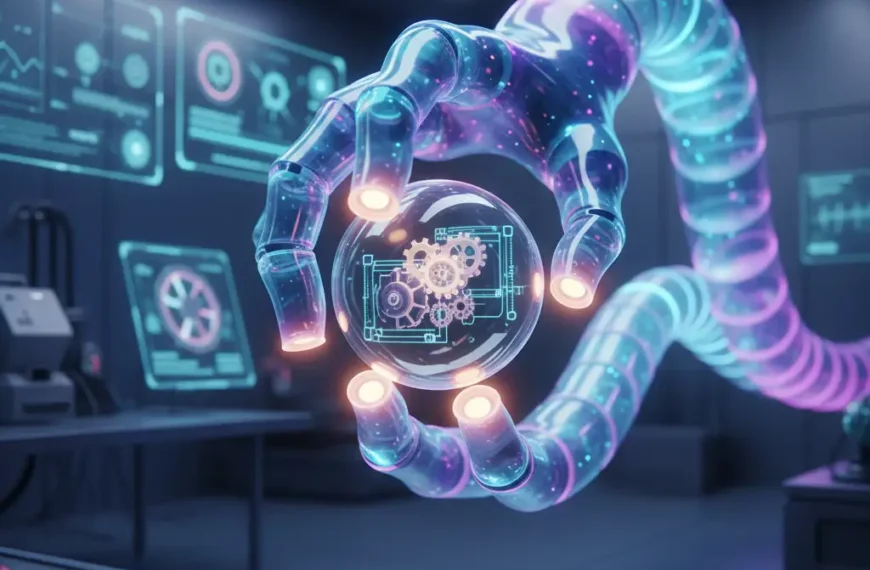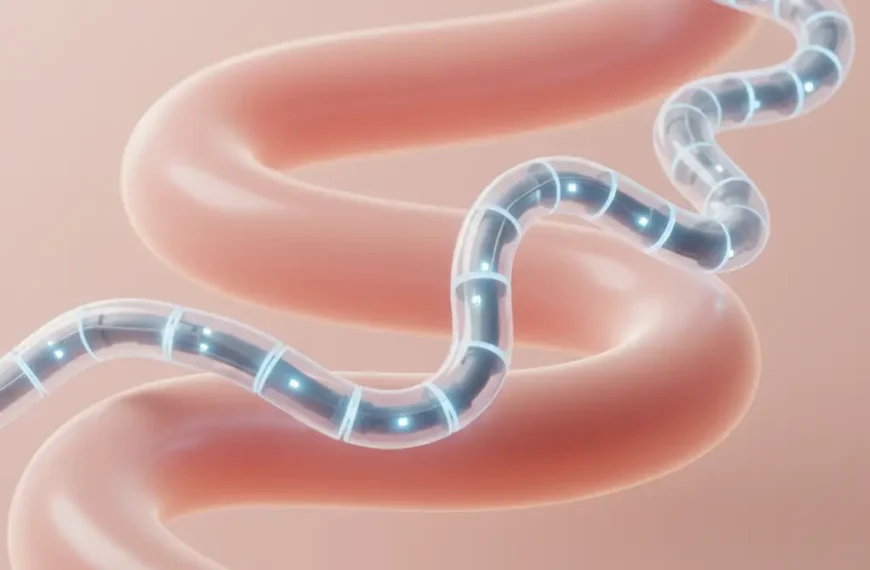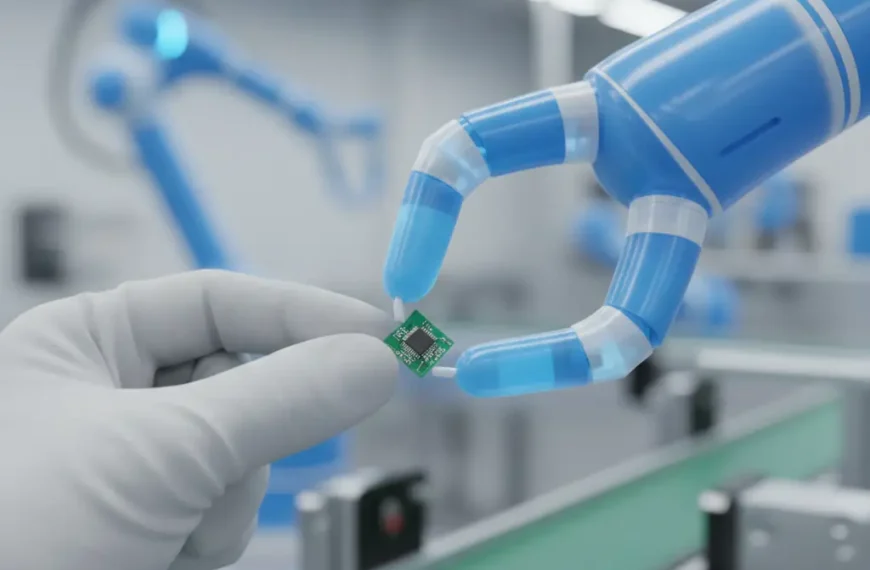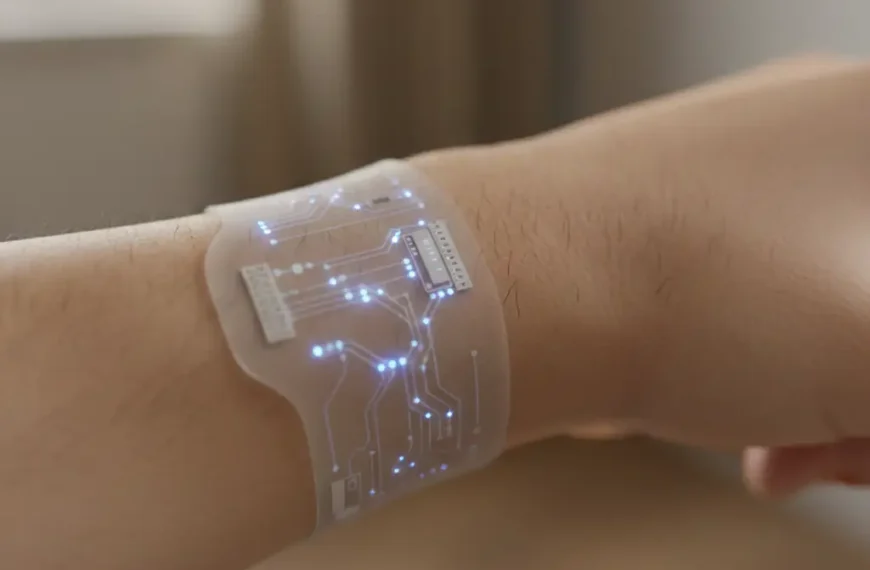

Imagine a world where electronics are no longer confined to rigid boxes. Think of devices that stretch, bend, and conform seamlessly to your body or an irregular surface.
This is the future promised by compliant systems, and it hinges entirely on developing equally flexible power sources and circuits.
Traditional rigid batteries and circuit boards simply cannot handle the dynamic stress of movement, leading to cracks, performance loss, or outright failure.
The journey toward truly functional, stretchable electronics requires a fundamental rethink of how we store and transmit energy.
The Need for Compliance in Modern Electronics 🔋
In the past decade, we’ve seen a rapid shift towards wearable technology and soft robotics.
From fitness trackers to sophisticated medical sensors, devices are now designed to move with the user, necessitating a dramatic change in component design.
A conventional battery, much like a brick, is structurally rigid and brittle; subjecting it to bending or stretching would quickly disrupt its internal chemistry and electrical connections.
Compliant systems, therefore, are devices engineered to withstand significant mechanical deformation—such as stretching or bending—while maintaining stable electrical function.
Defining Flexible vs. Stretchable 📐
While often used interchangeably, the terms ‘flexible’ and ‘stretchable’ refer to distinct mechanical properties in energy storage.
Flexible batteries can be bent or folded, much like a piece of paper, but they do not accommodate significant elongation. They are ideal for devices like roll-up displays or smart cards.
Stretchable batteries go a step further; they can elongate like a rubber band, accommodating strain in multiple directions, which is critical for skin-contact wearables or smart textiles.
Innovative Design Strategies for Compliant Power Systems 💡
Achieving compliance in a functional battery or circuit involves ingenious solutions across materials science and structural engineering.
Researchers have focused on two main approaches to ensure components remain electrically stable during deformation.
Structural Engineering for Flexibility
One primary strategy involves designing brittle, conductive materials in ways that enable them to deform without breaking. Think of a slinky or a phone cord.
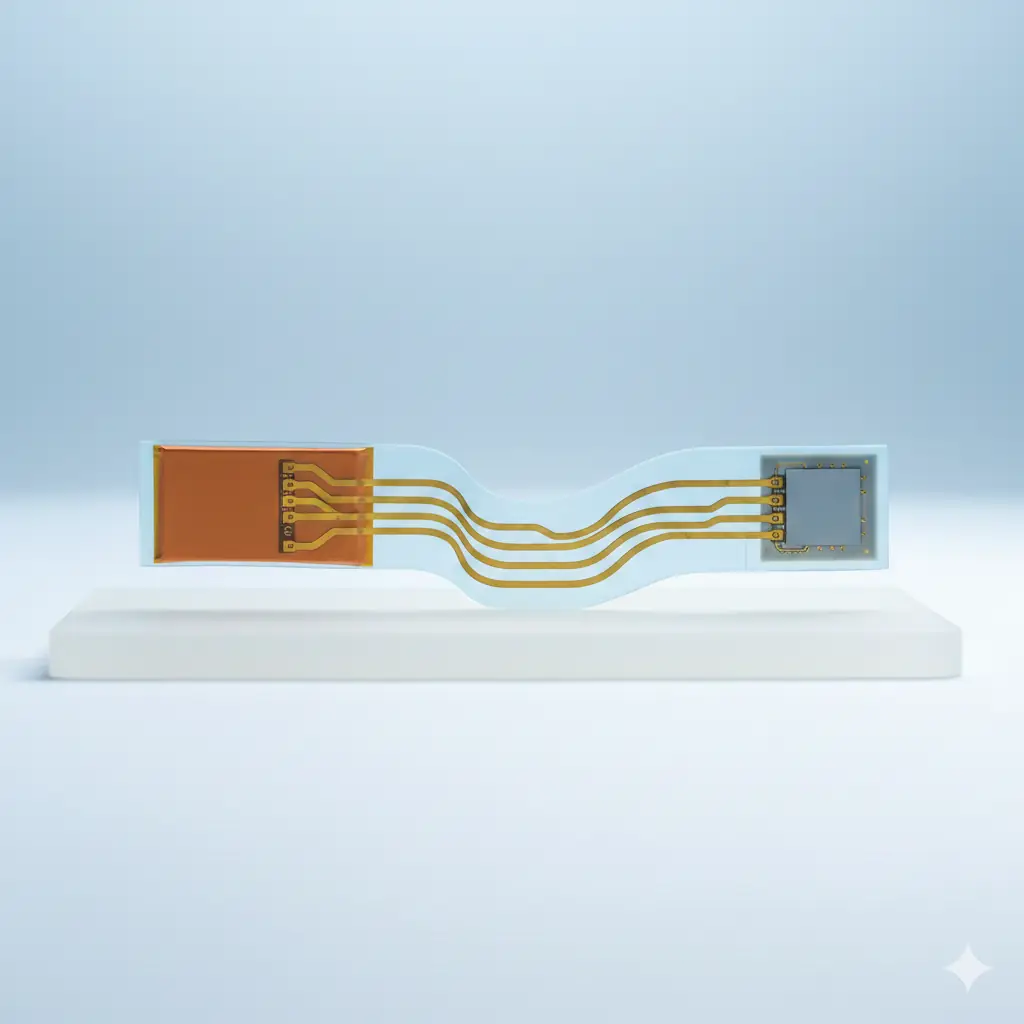
The most popular design is the serpentine or wavy interconnect. Here, rigid electronic components, called ‘islands,’ are placed on a stretchable substrate and connected by fine, wavy wires.
When the system is stretched, these wavy interconnects simply unfurl, absorbing the strain and preventing the rigid islands from experiencing destructive forces.
Another structural method is the use of origami or kirigami patterns, where strategic folds or cuts allow a flat material to be folded, twisted, or stretched into a 3D shape while maintaining conductivity.
Advanced Materials for Intrinsic Stretchability
The other major approach focuses on replacing traditional, rigid battery components (like metal current collectors and brittle electrode powders) with intrinsically stretchable materials.
This involves using composite materials, such as conductive polymers or elastomers embedded with conductive nanomaterials like carbon nanotubes or silver nanowires.
Even the electrolyte, the substance that allows ions to move between the electrodes, is being replaced with flexible, solid polymer electrolytes that can stretch along with the other components.
These soft material strategies result in a battery where every part can inherently elongate, providing a higher degree of compliance than purely structural designs.
Flexible Batteries: Overcoming Chemical Hurdles 🔬
A battery’s performance is intrinsically linked to its chemical integrity, which makes the challenge of flexibility particularly complex.
Unlike a simple wire, a battery relies on precise electrochemical reactions occurring between electrodes and an electrolyte.
Any loss of contact or breach in the internal structure due to mechanical stress immediately degrades performance or causes short-circuiting.
💡 Insight Box: The key trade-off in compliant power is often between high energy density (more stored power) and mechanical compliance. Maximizing one often means sacrificing the other.
For example, in a stretchable Lithium-ion battery, the brittle active material that stores the energy must remain adhered to the current collector and not detach when stretched.
Researchers tackle this by using 3D porous structures or fiber-based designs, which provide a large surface area for chemical reaction while offering intrinsic compliance.
Fiber-shaped batteries are particularly promising, as they can be woven directly into textiles, turning a garment into a power source that is highly comfortable and breathable.
The Impact and Applications of Compliant Power 🌐
The successful development of robust, compliant energy storage and circuits is the final barrier to a massive shift in how we interact with technology.
Imagine a future where you don’t carry a device; you wear it, or it becomes an integrated part of your environment.
Wearable Technology and Smart Textiles
The most immediate application is in next-generation wearable devices. Instead of bulky watches, we’ll have ultra-thin, adhesive patches that monitor vital signs 24/7 without discomfort.
Smart clothing can incorporate these power sources to run sensors for health monitoring, regulate temperature, or provide real-time performance tracking for athletes.
Biomedical and Implantable Devices
For the healthcare sector, compliant batteries offer revolutionary potential. They can power implantable devices like pacemakers or neural stimulators that must conform safely and comfortably to soft, delicate biological tissues.
Furthermore, flexible batteries are crucial for powering electronic skin (e-skin) sensors used in prosthetics or advanced diagnostics, offering a new level of integration with the human body.
Soft Robotics and Foldable Electronics
Compliant power is also a prerequisite for soft robotics, where robots are made from flexible, rubber-like materials, allowing them to perform tasks in sensitive or unstructured environments.
Likewise, foldable smartphones, tablets, and roll-up displays require a power source that can withstand repeated, high-strain folding cycles without any degradation.
Challenges and the Path Forward 🚀
Despite the remarkable progress, compliant energy storage still faces significant hurdles that need to be overcome for widespread commercial adoption.
The two main challenges are energy density and long-term stability.
Currently, flexible and stretchable batteries generally store less energy than their rigid counterparts, making them unsuitable for power-hungry devices.
Also, maintaining stable performance over thousands of stretching, bending, or washing cycles is difficult, as repeated mechanical strain can inevitably lead to material fatigue and failure.
Key Future Tips for Energy Storage
In short, the road ahead is focused on iterative improvements and novel material synthesis.
- Increase Energy Density: Develop intrinsically stretchable active materials to maximize stored charge without increasing the device’s bulk or rigidity.
- Enhance Durability: Refine structural designs like serpentine interconnects to better manage stress concentration and ensure stable function over tens of thousands of cycles.
- Improve Safety and Biocompatibility: Transition fully to solid-state electrolytes to eliminate the risk of flammable liquid electrolytes, making the devices safer for implantable applications.
By focusing on these areas, the innovative minds in materials science and electrical engineering will soon make compliant energy a ubiquitous reality, powering a flexible and adaptive world.

 By
By