
🤖 The Flexible Challenge: Controlling Soft Robots
Soft robots, with their squishy bodies and continuous movements, are a marvel of engineering inspired by nature. They can squeeze through tight spaces, gently grasp delicate objects, and operate safely around humans.
However, this very flexibility, while being their greatest strength, also presents their biggest control challenge. Unlike rigid robots with a fixed number of joints, soft robots can bend and twist at virtually any point along their bodies.
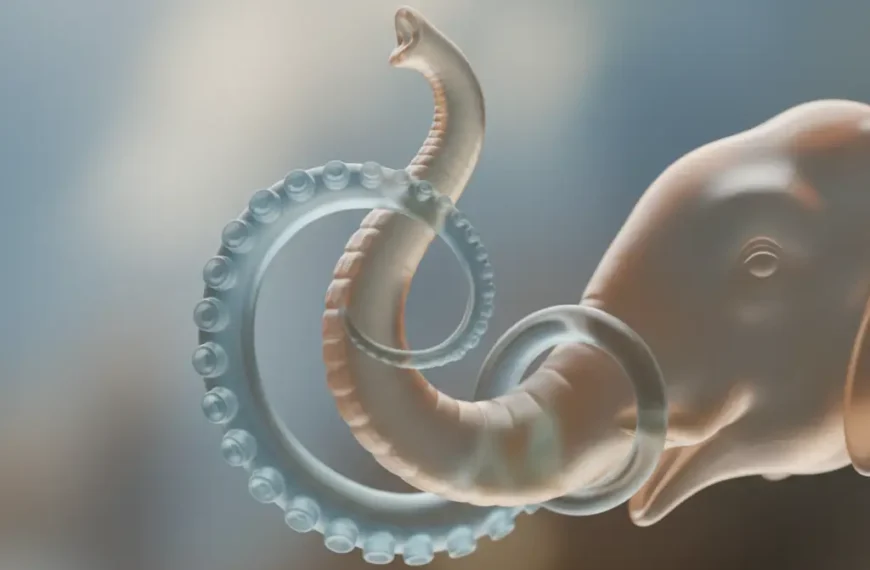
This means they possess what engineers call ‘infinite degrees of freedom’ – an incredibly complex task for traditional control methods. It’s like trying to accurately steer a cooked spaghetti noodle instead of a stiff rod.
—
🧠 Why Traditional Control Falls Short
For decades, rigid robots have been controlled using precise mathematical models. Engineers could accurately predict how a robot arm would move by calculating the angles of its few joints and the forces applied by its motors.
This works wonderfully for predictable, hard-bodied machines. But when you have a robot made of deformable material, its shape is constantly changing, influenced by gravity, internal pressure, and interaction with its environment.
Building an accurate mathematical model for such a complex, continuously deforming system is extraordinarily difficult, if not impossible. The sheer number of variables makes traditional programming approaches quickly become unmanageable.
The Problem of Infinite Variables
Imagine trying to describe every possible curve and twist of an octopus arm with a set of equations. Every tiny segment can bend independently, and each bend affects every other part.
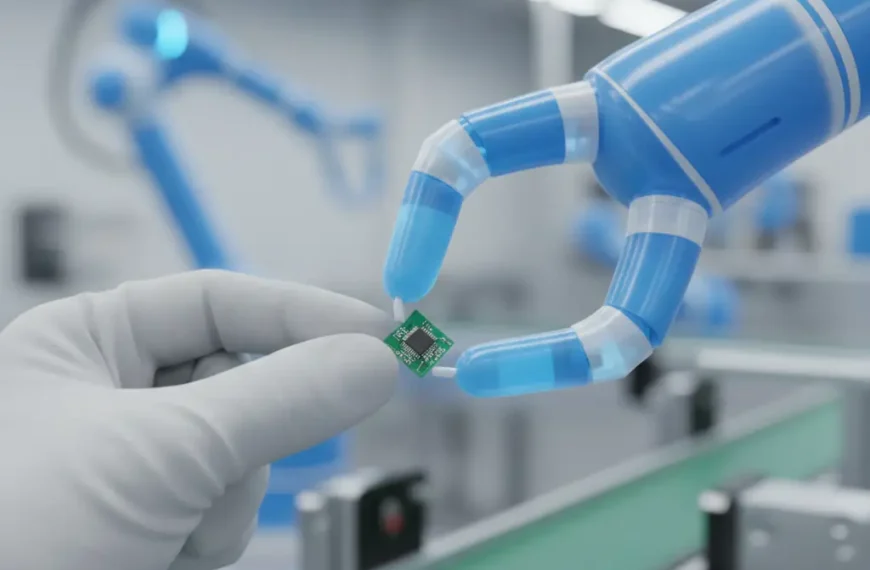
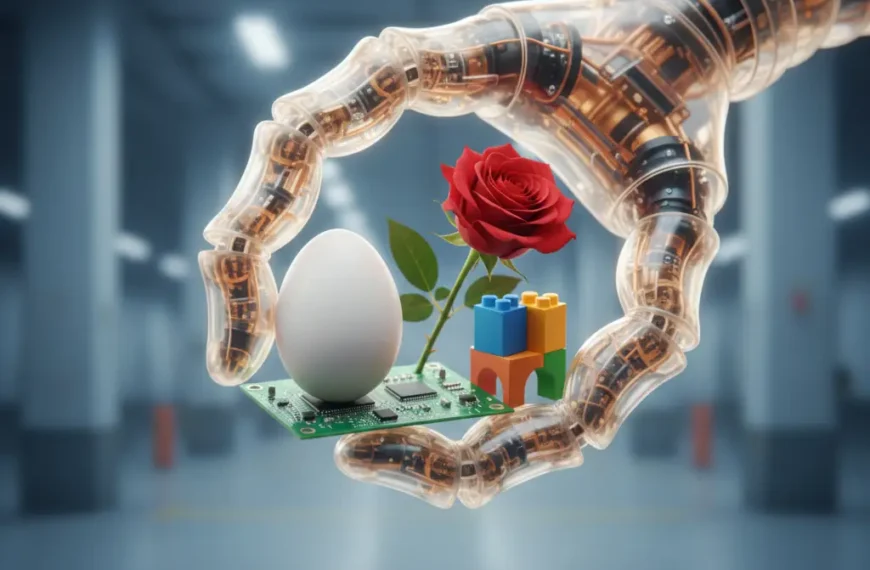
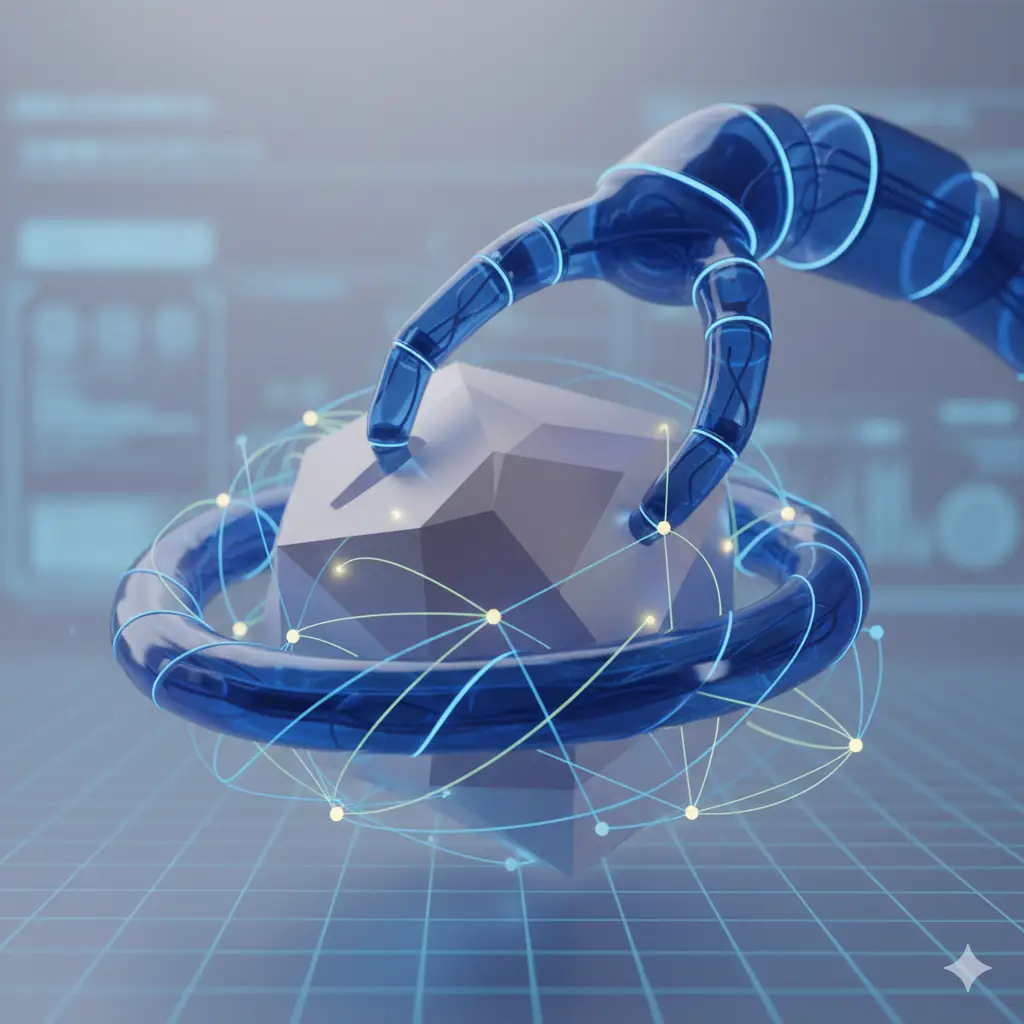
This is the fundamental problem of controlling soft robots. How do you tell a soft gripper to pick up an egg without crushing it when its ‘fingers’ can flex in countless ways? This is where Artificial Intelligence and Machine Learning step in.
—
💡 AI and Machine Learning: The Brains Behind the Bend
AI and ML techniques provide powerful tools to tackle the inherent complexities of soft robot control. Instead of relying on a perfect, pre-programmed mathematical model, these approaches allow robots to learn how to move effectively through experience.
Reinforcement Learning: Learning by Doing
One of the most promising AI methods is Reinforcement Learning (RL). Here, a soft robot learns through trial and error, much like a child learning to walk or a pet learning a trick.
The robot tries different movements, and if it achieves a desired outcome (like successfully grasping an object), it receives a ‘reward.’ If it fails, it receives a ‘penalty’ or no reward. Over thousands of attempts, the robot learns which actions lead to success.
This iterative process allows the robot to discover optimal control strategies for its flexible body, without explicit programming for every possible deformation. It’s truly learning how to embody its own intelligence.
Neural Networks: Pattern Recognition for Motion
Another crucial AI tool is Neural Networks. These are computational systems inspired by the human brain, excellent at recognizing complex patterns in data. For soft robots, neural networks can be trained to map desired movements to the necessary pneumatic pressures or electrical signals.
For example, a robot might be shown many examples of successfully gripping different objects. The neural network learns the subtle relationship between sensor readings (how the object feels) and the actuator commands (how much to squeeze).
This allows the soft robot to respond adaptively to new, unseen objects, adjusting its grip on the fly rather than relying on a rigid, pre-defined grip pattern.
—
🌐 The Symbiosis of Body and Brain
The beauty of AI/ML in soft robotics lies in the symbiotic relationship between the robot’s physical body and its intelligent control system. The robot’s softness allows for safe, adaptive interaction, while AI/ML provides the ‘brainpower’ to harness that flexibility effectively.
This is often referred to as Embodied Intelligence or morphological computation. The robot’s body isn’t just a passive structure; it actively contributes to solving control problems, simplifying the task for the AI.
For instance, a soft gripper might naturally conform to an object’s shape due to its material properties. The AI then only needs to learn to apply the correct amount of force, rather than precisely calculating every finger position.
Sensor Integration: Feeling the World
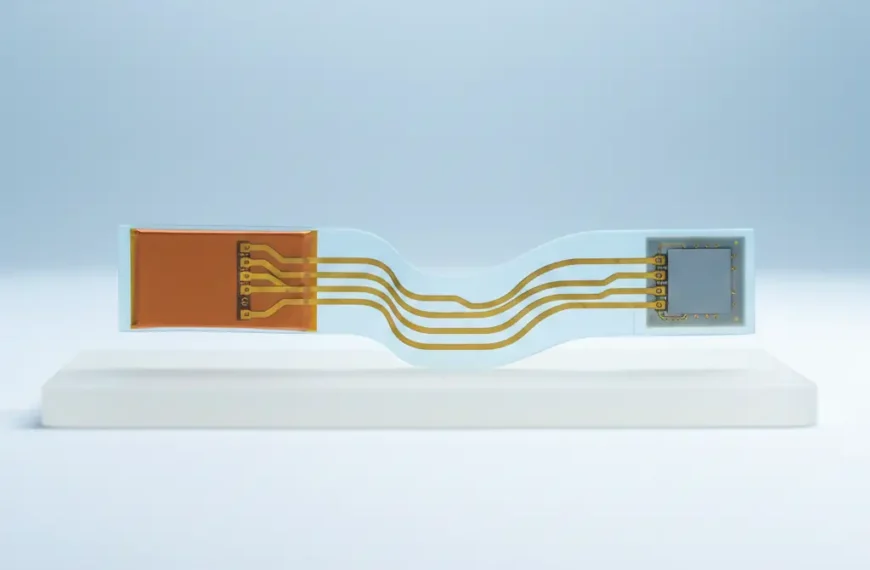
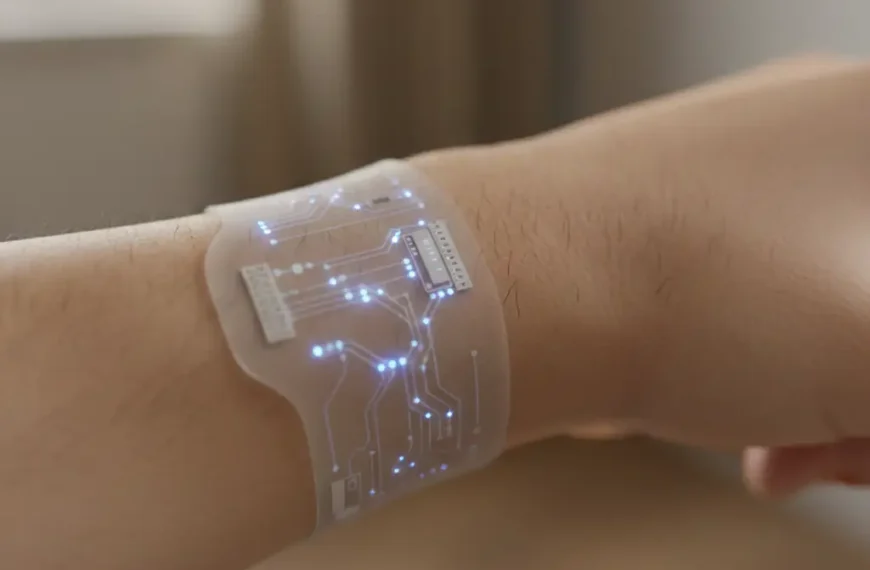
To learn effectively, soft robots need to ‘feel’ their environment. This involves integrating an array of soft, flexible sensors directly into their compliant bodies.
These sensors can measure strain (how much the body is bending), pressure (how hard it’s touching something), and even temperature. AI/ML algorithms then process this rich sensory data to refine the robot’s understanding of its own body and its surroundings.
—
📈 Advantages of AI/ML Control in Soft Robotics
| Benefit | Explanation |
|---|---|
| Adaptive Control | Soft robots can learn to perform tasks in varied, unpredictable environments. |
| Simplified Programming | Reduces the need for complex, manual mathematical modeling of deformation. |
| Enhanced Robustness | Can recover from unexpected changes or minor damage by learning new behaviors. |
| Bio-inspired Motion | Helps achieve fluid, natural movements akin to biological organisms. |
| Improved Task Performance | Enables precise manipulation of delicate or irregularly shaped objects. |
—
🚀 The Road Ahead: Smarter, More Flexible Futures
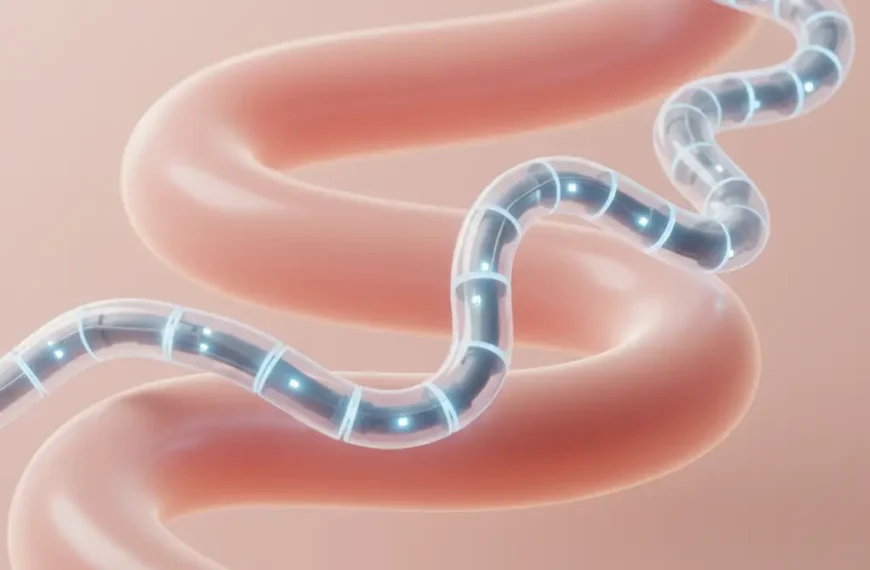
The combination of soft robotics and advanced AI/ML is unlocking incredible potential across various fields. From medical devices that navigate the human body with unprecedented gentleness to collaborative robots that work safely alongside humans in factories, the future is looking much more flexible.
As AI algorithms become even more sophisticated and computing power continues to grow, soft robots will become increasingly autonomous and capable. They’ll be able to learn faster, adapt to even greater complexity, and perform tasks that are currently beyond the reach of any machine.
The challenge of ‘infinite degrees of freedom’ is slowly being tamed, not by forcing rigidity, but by empowering flexibility with intelligent learning. This exciting synergy promises a new era of robots that are both physically compliant and intellectually powerful.
 By
By