
🏭 From Cages to Collaboration: The Rise of Cobots
For decades, traditional industrial robots were powerful but dangerous. They had to be fenced off in large safety cages to prevent accidental injury to human workers due to their speed, force, and rigid metal parts.
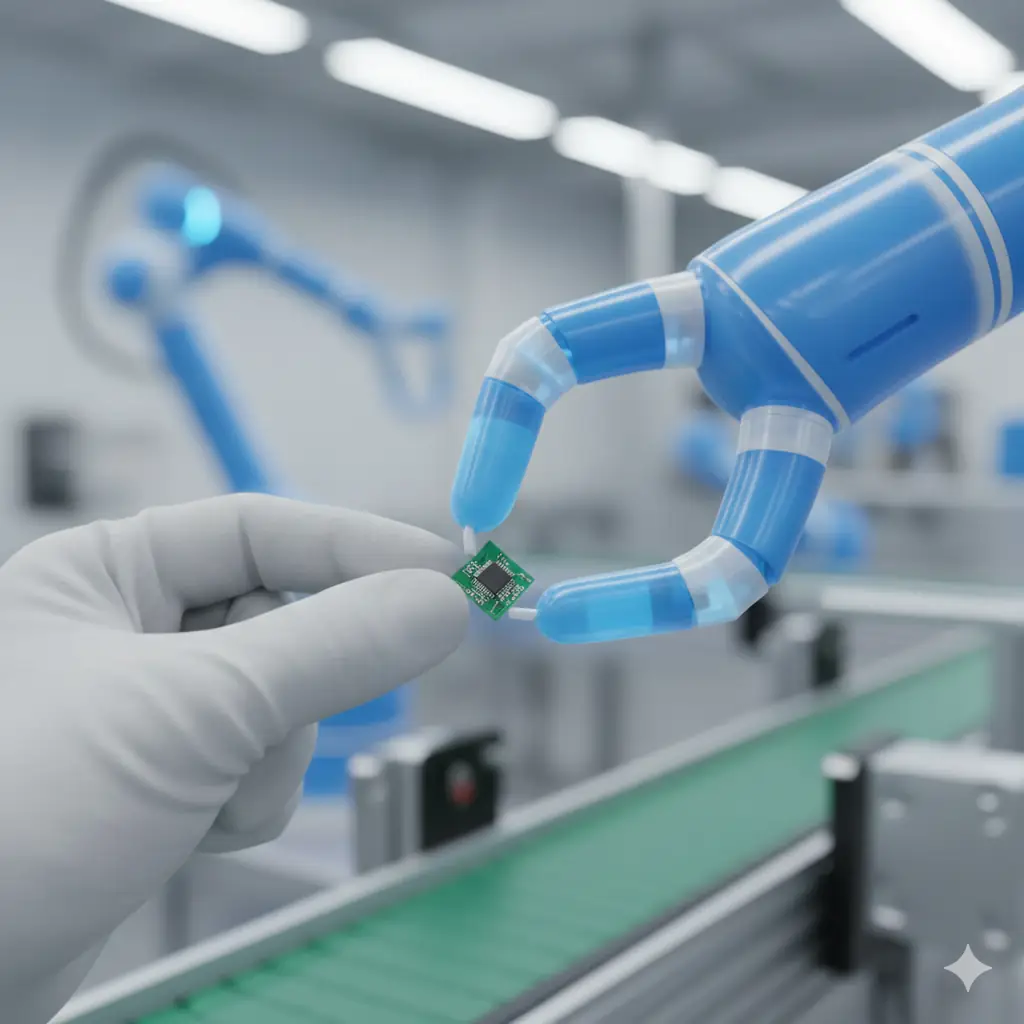
The manufacturing world has now embraced a new paradigm: Collaborative Robots, or Cobots. These machines are specifically designed to operate directly alongside human colleagues, sharing the same workspace without needing barriers.
The transition from isolated automation to shared workspace is largely driven by advances in sensing and, crucially, the incorporation of soft robotics principles into their design. This compliance is essential for safety.
—
🛡️ Safety First: The Soft Robotics Advantage
The core philosophy of soft robotics—compliance and intrinsic safety—is perfectly suited for the cobot environment. A hard, fast-moving traditional arm requires sophisticated external sensors to avoid collisions, and even then, a mishap can be serious.
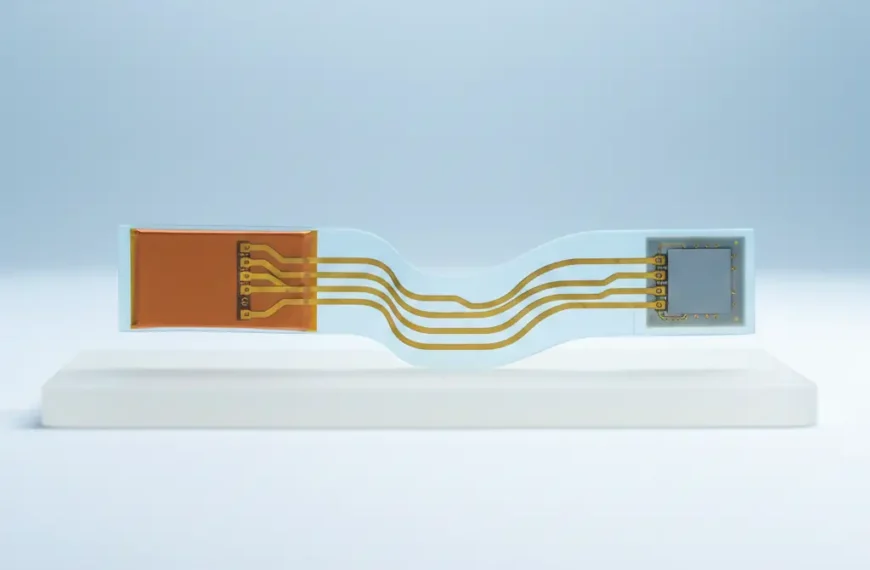
Soft cobots utilize flexible, compliant materials, like silicone skins and pneumatic actuators, in their outer layers or gripping mechanisms. If a collision occurs, the material absorbs and dissipates the energy, reducing impact force dramatically.
This inherent ‘gentleness’ means the robot’s structure itself acts as a safety feature. The machine is designed not just to avoid harm, but to be fundamentally harmless in contact.
Intrinsic vs. Extrinsic Safety
Traditional cobots often rely on extrinsic safety: high-tech sensors (vision, torque sensors) that stop the machine after detecting a collision or close approach. This relies heavily on computation and fast reaction times.
Soft cobots often benefit from intrinsic safety: the safety is built into the physical body. A soft gripper doesn’t need complex vision to know it’s not crushing an object; its material compliance prevents the crushing force from ever being applied.
This blend of physical compliance and smart sensing allows for seamless, stop-free collaboration, maximizing productivity and minimizing risk simultaneously.
—
🤝 Defining the Collaboration on the Line
Cobots aren’t meant to replace human workers entirely, but rather to augment and assist them. They take on tasks that are repetitive, physically demanding, or require consistent, unwavering precision.
A common application involves pick-and-place tasks. A human worker might perform a critical quality check, and then the soft cobot gently picks up the passed item and places it into a box for shipping.
Examples of Soft Cobot Tasks
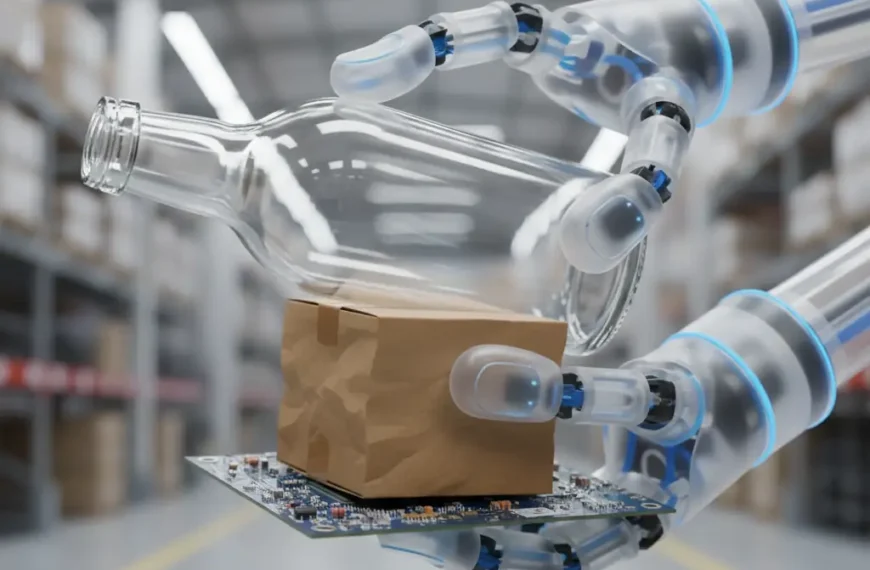
- Delicate Handling: Picking up fragile electronics components or laboratory glassware without using crushing force.
- Assisted Assembly: Holding a heavy or awkwardly shaped part steady while a human worker screws it into place.
- Packaging and Sorting: Gently sorting different kinds of fruit or vegetables based on visual cues, where a rigid gripper would cause bruising.
The key is the ability to adapt to variability. If a human places an item slightly off-center, a compliant gripper simply conforms to it, avoiding errors that would trip up a stiff, position-dependent robot.
The concept of ‘variable stiffness’ is critical. A soft cobot might use fluidics or granular jamming to be very soft when approaching an object, but then momentarily stiffen just enough to lift or manipulate a payload securely. This on-demand adaptability is a core innovation.
—
🚀 Overcoming Challenges in the Shared Space
Integrating any robot into a human workspace presents challenges. For soft cobots, the primary hurdles often revolve around speed and long-term durability, compared to their rigid cousins.
Because soft materials are inherently less rigid, they generally cannot achieve the same high speeds or lift the heaviest payloads as traditional industrial arms. There is a necessary trade-off between compliance and performance metrics.
However, the compliance gained often outweighs the speed lost, especially in logistics and light manufacturing where product delicacy and human interaction are paramount.
Notes on Durability
Soft actuators, typically made of polymers like silicone, can eventually suffer from fatigue or punctures due to repetitive flexing and exposure to harsh factory environments. Researchers are constantly developing new composite materials to improve the lifespan of these compliant components.
New surface treatments and self-healing materials are also being investigated to ensure these collaborative partners can endure the daily rigors of a busy assembly line.
—
💡 Tips for Adopting Soft Cobot Technology
Integrating Soft Automation Successfully
- Identify True Needs: Determine if your bottleneck is speed (rigid robot territory) or precision/delicacy/safety (soft cobot territory).
- Focus on Gripping: Start by upgrading existing robotic arms with new soft end-effectors to immediately benefit from gentle manipulation.
- Prioritize Training: Ensure human workers understand the cobot’s safety mechanisms and compliance features to build trust and optimize workflow efficiency.
The Cobot Revolution is really a safety revolution enabled by soft robotics. By embracing compliant design, we are moving toward a future where automation isn’t something to be feared or caged, but a helpful, gentle partner working right beside us.

 By
By