
🧠 Beyond the Brain: Intelligence in the Body
When we think of intelligence, we usually picture a powerful brain or complex computer algorithms. In traditional robotics, intricate programming is needed to tell a rigid robot arm exactly how to move, grip, and interact with its environment.
But what if a robot’s intelligence wasn’t just in its code, but also in its very form? This is the revolutionary concept of Embodied Intelligence, or morphological computation, a cornerstone of soft robotics.
It suggests that a robot’s physical body—its shape, materials, and mechanical properties—can actively contribute to solving control problems, dramatically simplifying the need for complex programming. It’s truly a paradigm shift.
—
🐙 Nature’s Masterclass: Intelligence Without a Central Brain
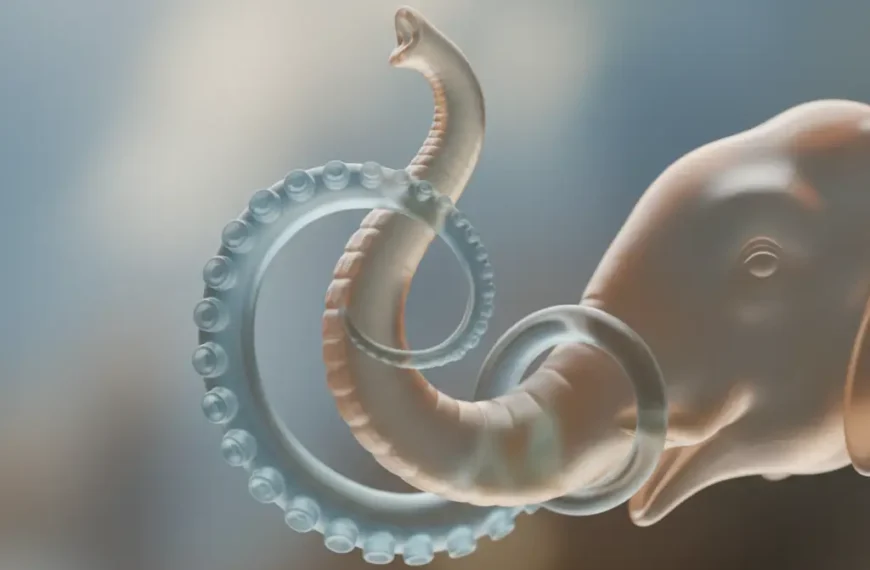
The best examples of embodied intelligence come straight from nature. Consider an octopus: it has no rigid skeleton, and its arms contain more neurons than its brain.
Yet, an octopus can gracefully coil its arms, manipulate objects, and navigate complex spaces with incredible dexterity. How does it manage this without a ‘supercomputer’ brain?
Its soft, compliant body and the way its muscles are structured allow for intrinsic movements and interactions that don’t require explicit, complex calculations for every single bend. The body itself performs much of the ‘computation.’
—
💡 The Principle: Passive Compliance and Smart Materials
For robots, embodied intelligence means designing the physical form so that it naturally achieves desired behaviors through its interaction with the world. This often relies on passive compliance and the use of smart materials.
Passive Compliance: Adapting Without Computing
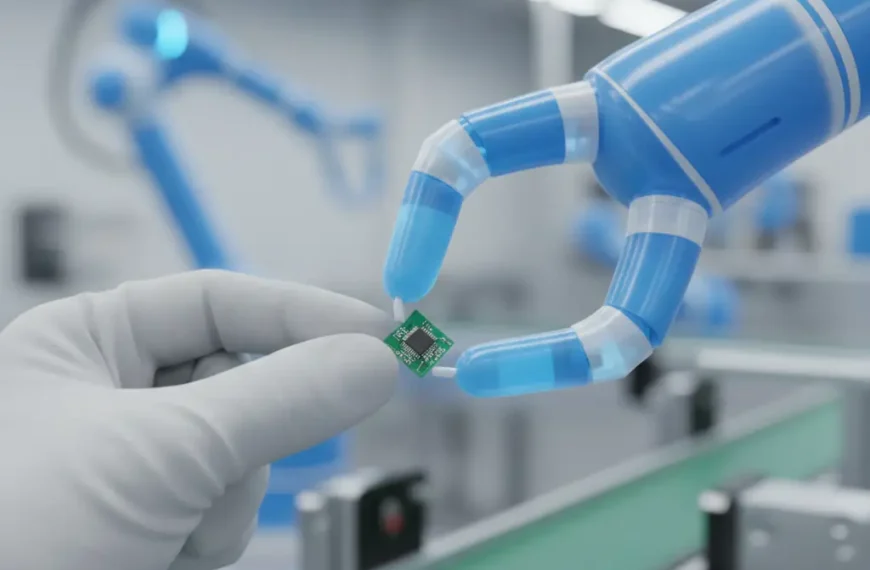
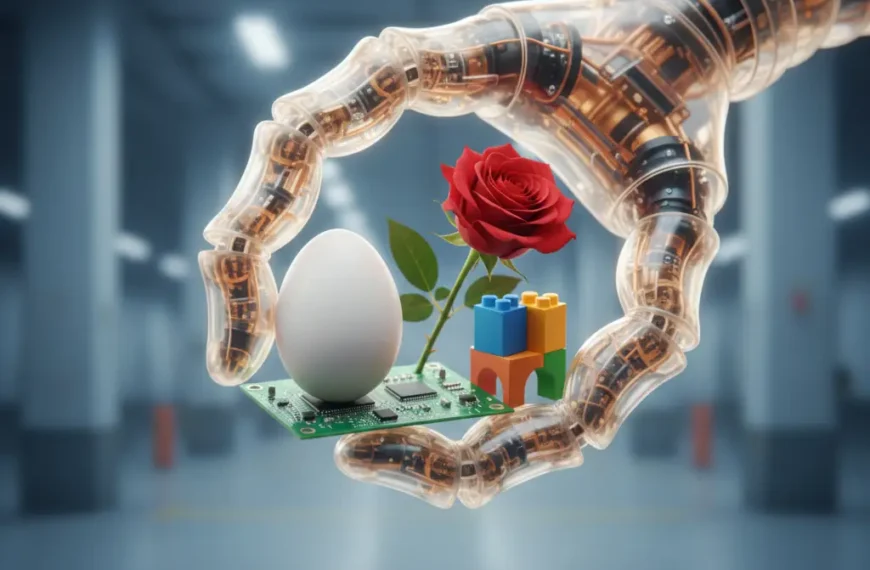
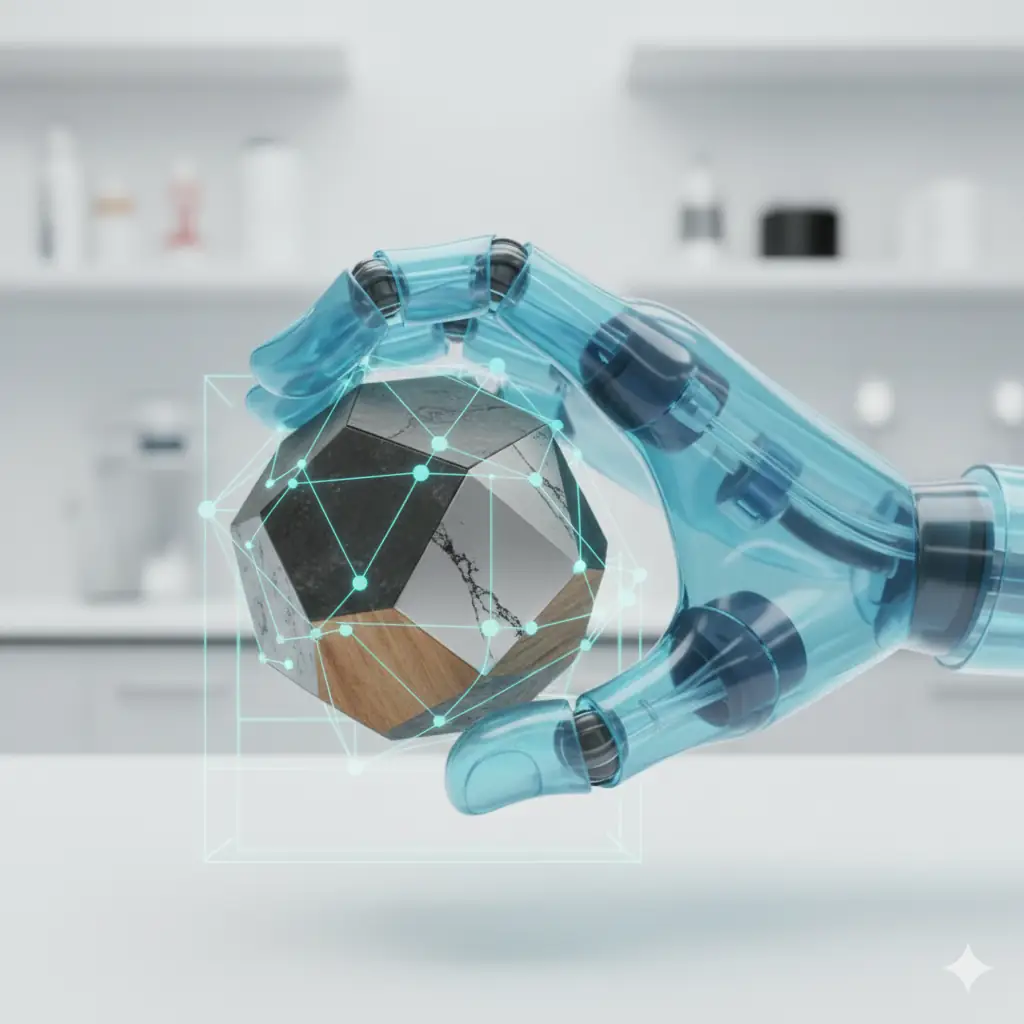
A soft robotic gripper, made of flexible silicone, exemplifies passive compliance. When it encounters an irregularly shaped object, its soft fingers naturally deform and wrap around the object’s contours.
This adaptation happens automatically due to the material’s properties—no complex sensors or programming are needed to calculate the object’s shape and adjust the grip. The gripper simply conforms, reducing the computational burden.
Compare this to a rigid, multi-fingered robotic hand that would need intricate vision systems and complex algorithms to identify the object’s geometry and precisely position each finger. The soft gripper’s body does the work.
Smart Materials: Actuation from Within
Beyond passive deformation, embodied intelligence also leverages smart materials that can change their properties in response to stimuli. These materials act as both body and actuator.
For example, a soft robot made of temperature-sensitive polymers can be designed to automatically bend when heated, without any external motors. The material itself ‘decides’ how to move based on its internal properties and external conditions.
—
⚙️ Designing for Embodied Intelligence: Key Principles
Engineers designing robots with embodied intelligence follow a few core principles to make the body do more of the work, and the brain do less.
- Material Selection: Choosing polymers, elastomers, and composites that have inherent flexibility, damping, or responsiveness.
- Morphological Design: Shaping the robot’s body with specific geometries (e.g., internal channels, curved structures) that naturally lead to desired movements when actuated.
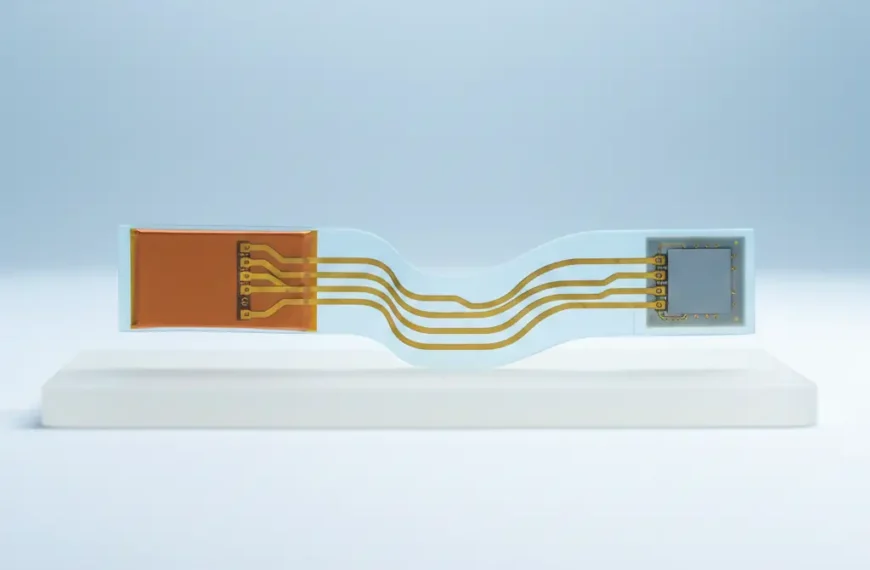
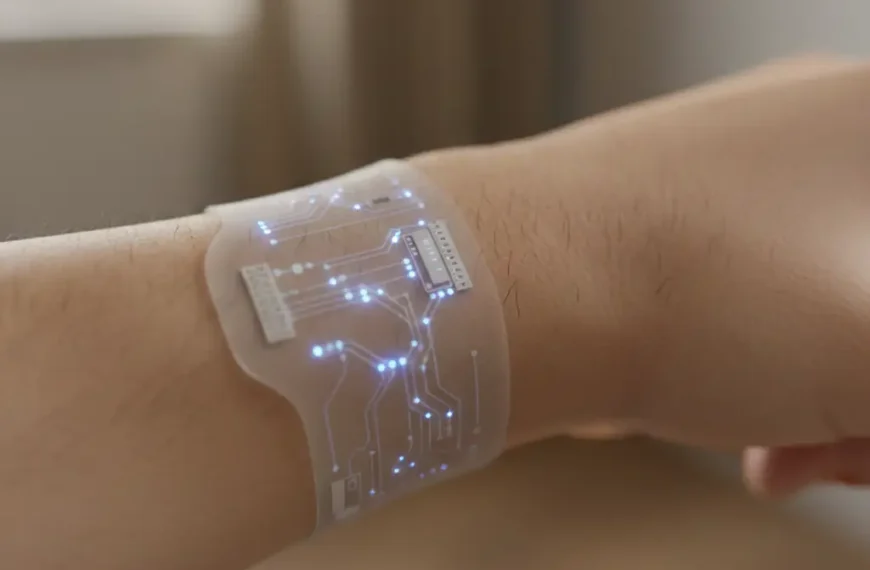
- Distributed Sensing: Embedding soft sensors directly into the robot’s skin so it can ‘feel’ its environment and react locally without central processing.
- Reduced Actuation: Designing the robot to use fewer, simpler actuators, relying on the body’s compliance to achieve complex motions.
—
🌟 The Benefits: Simpler, Robust, and Resilient
The embodied intelligence approach offers several compelling advantages for soft robots, particularly when operating in unpredictable, real-world environments.
Simpler Control Systems
By offloading computational tasks to the robot’s physical body, the control algorithms become much less complex. This means fewer lines of code, less powerful processors, and faster reaction times.
Enhanced Robustness
A robot whose body intrinsically reacts to its environment is often more robust. If it bumps into something, its soft body simply deforms, absorbing the impact rather than needing complex sensor feedback and precise motor adjustments to avoid damage.
Improved Adaptability
Embodied intelligence allows robots to adapt more fluidly to unexpected variations in their environment or in the objects they interact with. Their physical form allows them to be versatile problem-solvers on the fly.
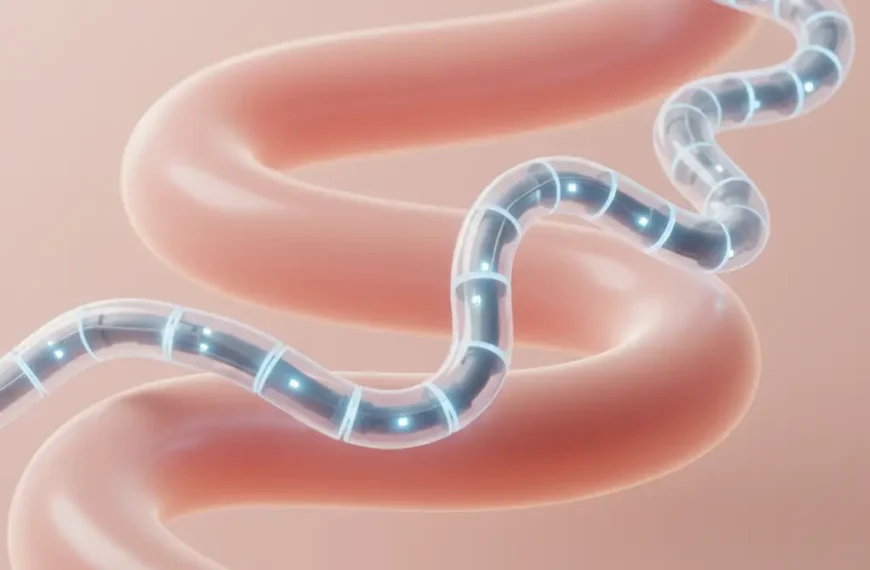
Example: A soft robotic worm designed to move through rubble can use the inherent flexibility of its body to conform to tight spaces and squeeze past obstacles without explicit path planning for every small stone.
—
🔮 The Future: Truly Smart Materials and Forms
As materials science advances, we can expect to see even more sophisticated forms of embodied intelligence. Imagine materials that can self-heal, reconfigure their stiffness, or even process information at the material level.
This vision moves towards robots where the distinction between ‘brain’ and ‘body’ blurs, resulting in truly organic and autonomous machines. They will operate with an efficiency and adaptability that rigid robots can only dream of.
Embodied intelligence isn’t just a clever design philosophy; it’s a fundamental shift in how we build and understand robots, bringing them closer to the elegant, adaptable intelligence found throughout the natural world.

 By
By