
🏭 The Challenge of Modern Manufacturing: Adaptability!
In today’s fast-paced world, consumer demands are constantly shifting. Companies can’t afford to produce millions of identical items anymore; they need to quickly switch between different products, customize orders, and handle delicate materials. This is where traditional, rigid robots often hit a wall.
Hard, metal robots are fantastic for repetitive, high-precision tasks, but they lack the finesse and adaptability needed for diverse product lines. Changing a robotic setup for a new product can be incredibly time-consuming and expensive. This is where flexible manufacturing comes in, and with it, the rise of soft robotic actuators.
What Are Soft Robotic Actuators?
An ‘actuator’ is essentially the part of a robot that makes it move—think of it as a muscle. Traditional actuators often use motors, gears, and pistons, making them stiff and powerful but also rigid and sometimes clumsy with delicate objects.
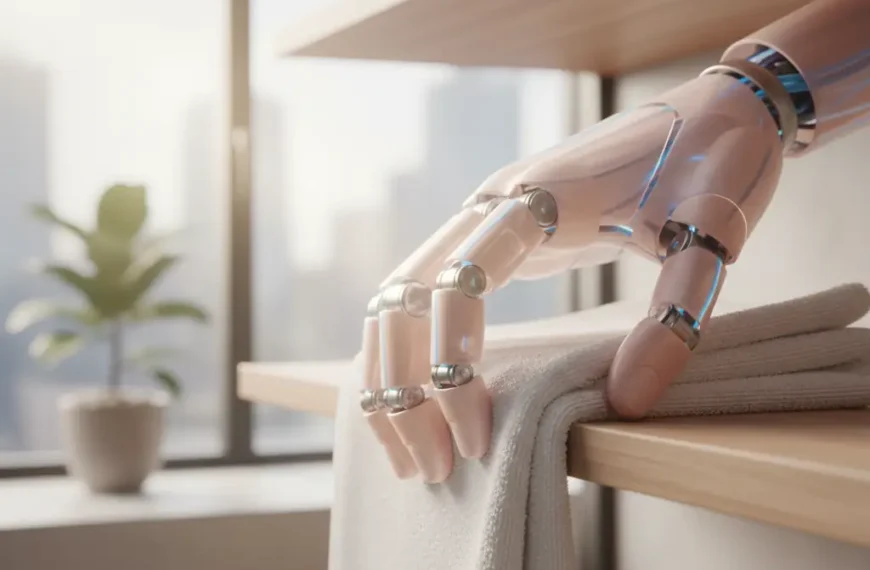
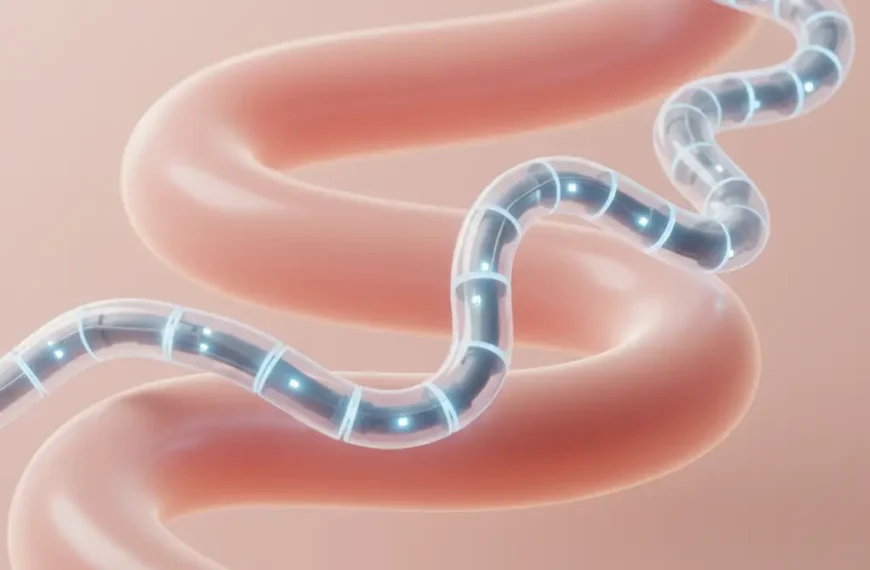
Soft robotic actuators, on the other hand, are made from flexible, deformable materials like silicone, rubber, or specialized plastics. They achieve motion by inflating with air or liquid, changing shape when exposed to heat, or through other ‘smart material’ properties.
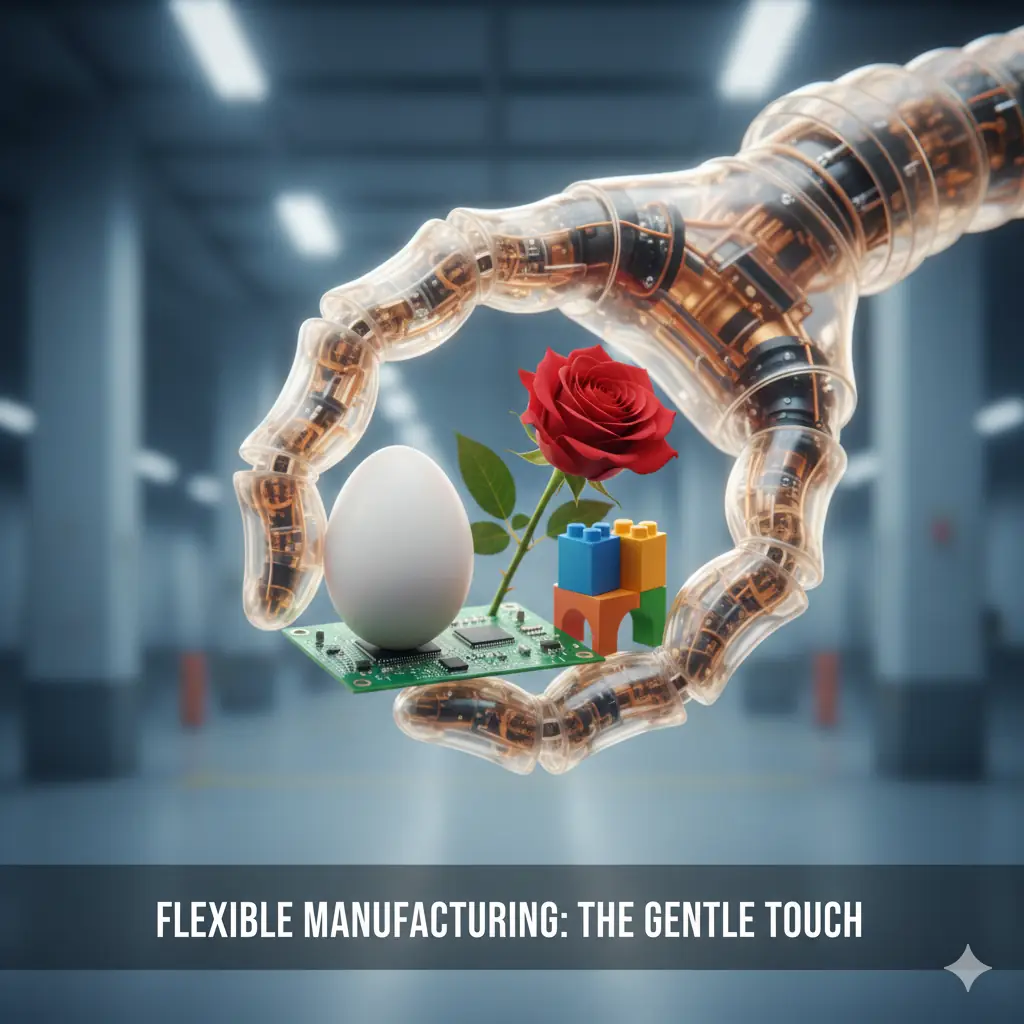
This inherent flexibility allows them to grip, push, and manipulate objects with a gentle, compliant touch, much like a human hand. They can deform around irregular shapes, making them incredibly versatile.
Why Flexibility Matters for Variable Product Lines
Imagine a factory that manufactures everything from fragile glassware to robust automotive parts. A traditional robot would need completely different end-effectors (grippers) and precise reprogramming for each item. This is inefficient and costly.
Soft robotic actuators, however, can handle a wide variety of items with the same basic design. Their inherent compliance means they can adjust to different sizes, shapes, and textures without needing extensive retooling or complex sensors and control systems.
This dramatically speeds up changeovers between product lines and reduces the overall investment in specialized equipment. It’s about ‘one gripper fits (almost) all,’ making manufacturing much more agile.
Example: Handling Delicate Objects
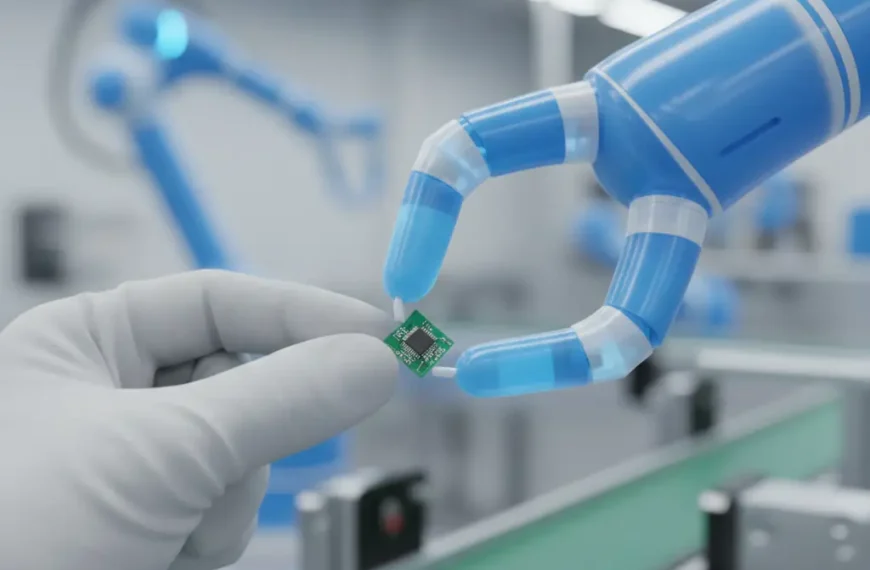
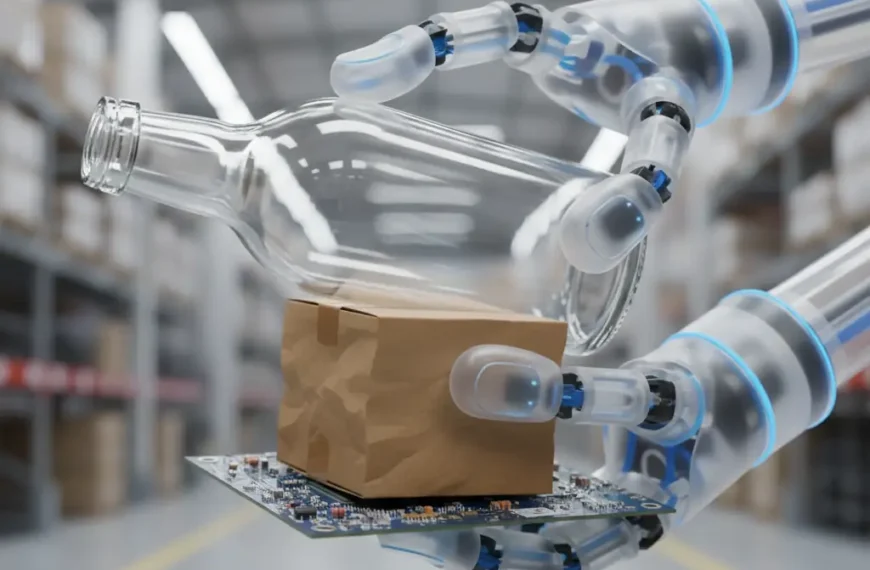
Consider a soft robotic gripper designed like a series of inflatable fingers. It can pick up a ripe tomato without bruising it, then immediately switch to handling a circuit board without damaging its delicate components. Its soft structure naturally conforms, distributing pressure evenly.
This would be a monumental challenge for a rigid, claw-like gripper, which would either crush the tomato or be unable to securely grasp the flat circuit board. The soft gripper’s adaptability is its superpower.
Key Advantages in Flexible Manufacturing
The benefits of integrating soft robotic actuators into a manufacturing environment are numerous, especially for companies dealing with diverse and rapidly changing product catalogs.
- Versatility: A single soft gripper can handle a wide range of product sizes, shapes, and materials, reducing the need for multiple specialized tools.
- Gentle Handling: Their inherent compliance means they can grasp fragile or irregularly shaped items without damage, minimizing waste.
- Reduced Setup Time: Less reprogramming and retooling are needed when switching between different products, leading to faster production cycles.
- Safety: Soft robots are inherently safer for human-robot collaboration, as accidental contact is less likely to cause injury.
- Cost-Effectiveness: While the initial technology can be advanced, the long-term savings on retooling, programming, and reduced product damage can be substantial.
Comparing Soft and Traditional Actuators
To really appreciate the shift, let’s briefly look at how soft actuators stack up against their rigid counterparts in a manufacturing context.
| Characteristic | Soft Robotic Actuators | Traditional Actuators |
|---|---|---|
| Flexibility/Adaptability | High; conforms to varied shapes. | Low; requires specific tooling. |
| Handling Delicate Items | Excellent; gentle, even pressure. | Challenging; risk of crushing/damage. |
| Setup/Changeover Time | Fast; minimal retooling. | Slow; extensive retooling/reprogramming. |
| Human-Robot Safety | High; less risk of injury. | Lower; requires safety cages/protocols. |
The Future is Flexible and Collaborative
The integration of soft robotic actuators is a major step towards truly flexible manufacturing. It allows factories to respond to market changes with unprecedented speed and efficiency. This isn’t just about making robots softer; it’s about making entire production lines smarter and more agile.
Furthermore, these soft robots are excellent candidates for collaborative robotics, working side-by-side with human workers in shared spaces, enhancing productivity without compromising safety. They are opening doors to automation in industries previously considered too delicate or varied for robots.
As the technology continues to advance, we can expect to see these gentle, adaptive machines becoming a common sight, quietly revolutionizing how goods are made, from the smallest electronic device to the most delicate pastry. The future of manufacturing is indeed looking a lot softer!
 By
By