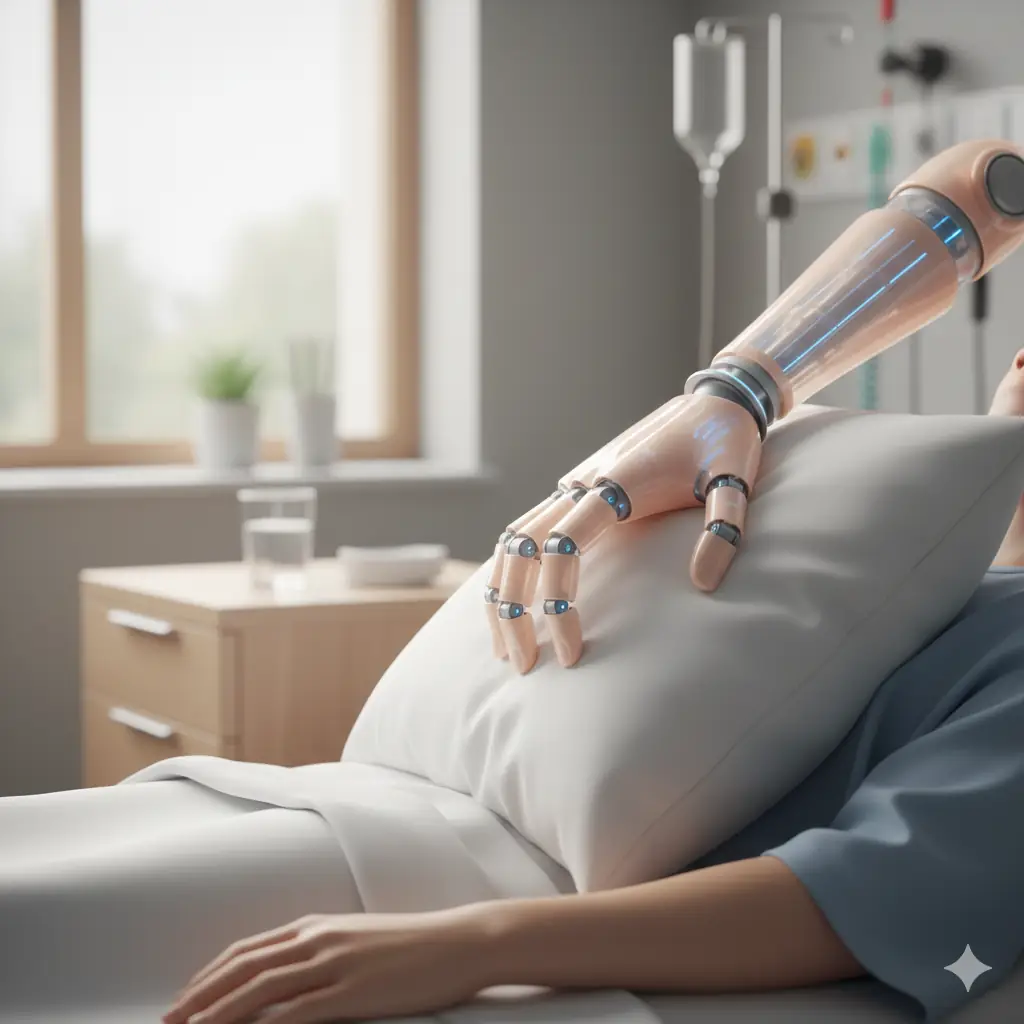

🏥 The Critical Need for Gentle Robotics
Hospitals and clinics are environments where human interaction, delicate handling, and patient vulnerability are constant factors. Introducing traditional, rigid robots—with their fast, forceful metal components—into these spaces poses significant safety challenges.
Any accidental contact between a rigid machine and a patient could result in serious injury. Therefore, conventional medical robots often require bulky safety cages or operate under stringent, slow-moving protocols.
Soft robotics offers a completely different, safer paradigm. By leveraging compliant materials and flexible movement, these robots are designed to be intrinsically gentle, placing patient safety first.
—
🛡️ Intrinsic Safety: Designed to Yield
The safety of a soft robot is built into its very structure, a concept known as intrinsic safety. This is a profound difference from rigid systems which rely on extrinsic safety, such as external sensors and emergency stop buttons, to avoid harm.
Soft robots are typically constructed from flexible, elastic materials like silicone. If an arm made of this material bumps into a patient, the material yields and deforms, absorbing and distributing the impact force widely.
This physical compliance means that the robot is fundamentally non-threatening, making direct, close human-robot interaction possible and safe, especially crucial in bedside care.
Force Limitation and Distribution
Soft actuators, often powered by compressed air (pneumatics), have a natural limit to the force they can exert. It is impossible for a pneumatically actuated soft arm to generate the crushing force of a metallic motor-driven joint.
Furthermore, because soft grippers conform to the shape of an object (or a limb), they spread the gripping force over a large contact area. This prevents the high-pressure points that cause bruising or damage to delicate tissues.
—
🛌 Applications in Direct Patient Care
The gentle nature of soft robotics makes them ideally suited for supportive roles involving direct physical contact with patients, such as in rehabilitation and daily assistance.
Assisted Mobility and Rehabilitation
Soft robotic exosuits, designed for stroke patients or those needing mobility support, feel more like supportive clothing than rigid machinery. They move with the patient’s body, providing assistance only when necessary, minimizing discomfort.
If a patient has a sudden spasm or unpredictable movement, the compliant fabric and soft actuators of the suit simply yield, preventing the patient from fighting against a rigid, unmoving frame.
Delicate Hospital Tasks
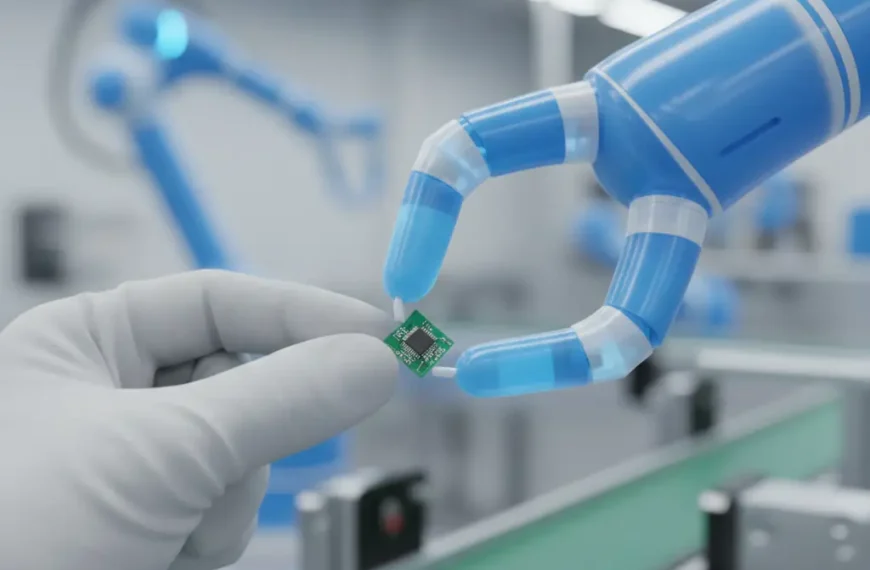
Soft grippers can handle fragile clinical items, such as laboratory glassware, test tubes, or delicate surgical instruments, without breakage. They can also assist nurses by gently lifting or positioning a patient’s limb during an exam or bandage change.
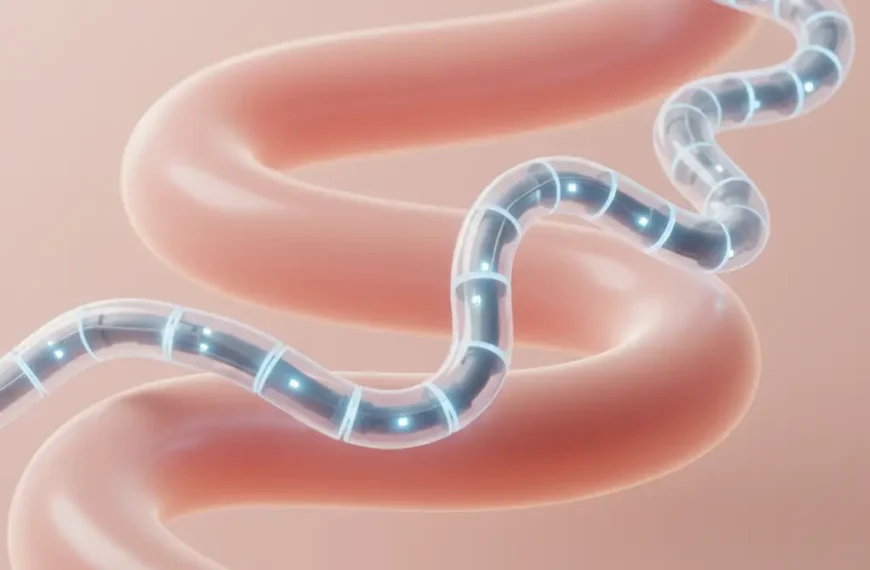
Beyond bedside care, soft endoscopes and catheters navigate the human body during surgery. Their flexibility allows them to follow tortuous, winding internal paths (like the colon or arteries) without scraping or perforating the sensitive surrounding tissues.
—
🦠 Biocompatibility and Sterilization
In addition to physical safety, medical robots must address biological safety. Soft robots are often constructed from biocompatible materials, such as medical-grade silicones, which are inert and less likely to cause adverse reactions when in contact with skin or internal tissues.
Sterilization is simplified in some soft designs. Certain silicones can withstand the high temperatures or chemical baths required for surgical-grade sterilization, ensuring the robot remains clinically clean and infection-free.
Notes on Contamination
While compliance is a strength, soft materials are often porous. Researchers are constantly working on new fabrication techniques to ensure soft robots do not harbor bacteria or other contaminants, which is paramount in hospital environments.
The trend is toward smoother, non-porous soft skins that can be easily cleaned and fully sterilized for high-risk contact scenarios.
—
📈 Key Safety Differentiators
The reasons soft robots are being embraced in healthcare highlight their specific safety advantages over traditional automation.
- Low Inertia: Soft components are generally lighter, meaning less momentum in motion, reducing the force of any accidental impact.
- Distributed Control: Force is spread across the entire body, rather than concentrated at sharp, rigid joints.
- Non-Intimidating Presence: Their organic, flexible appearance is less intimidating for patients, promoting trust and acceptance of robotic assistance.
Soft robotics is moving us toward a reality where robots are seamlessly integrated into the care process, not as mechanical threats, but as gentle, supportive partners.
 By
By