
💊 A Gentler Look Inside: The Need for Minimally Invasive Tools
Diagnostic procedures for the gastrointestinal (GI) tract—the stomach, small intestine, and colon—are often essential but can be invasive and uncomfortable. Traditional endoscopy uses long, flexible tubes inserted through the mouth or rectum, requiring sedation and specialized equipment.
While effective, these procedures carry risks and patient discomfort, making regular screening a challenge. There’s a clear demand for simpler, more comfortable ways to get a detailed look inside the body’s digestive system.
This is where soft robotic capsules are stepping in, promising a new era of diagnostics that is as easy as swallowing a pill but as insightful as a full examination. It’s truly diagnosing from within.
—
🌟 The Evolution of the Pill Camera
The concept of a swallowed camera, or capsule endoscopy, has been around for some time. These devices passively travel through the GI tract, taking thousands of pictures along the way. However, their major limitation is a lack of control: they are entirely reliant on the body’s natural peristalsis (muscle contractions) to move.
If the doctor needs a better look at a specific area, or if the capsule gets stuck, there is no way to intervene. This passivity limits the diagnostic capabilities of first-generation pill cameras.
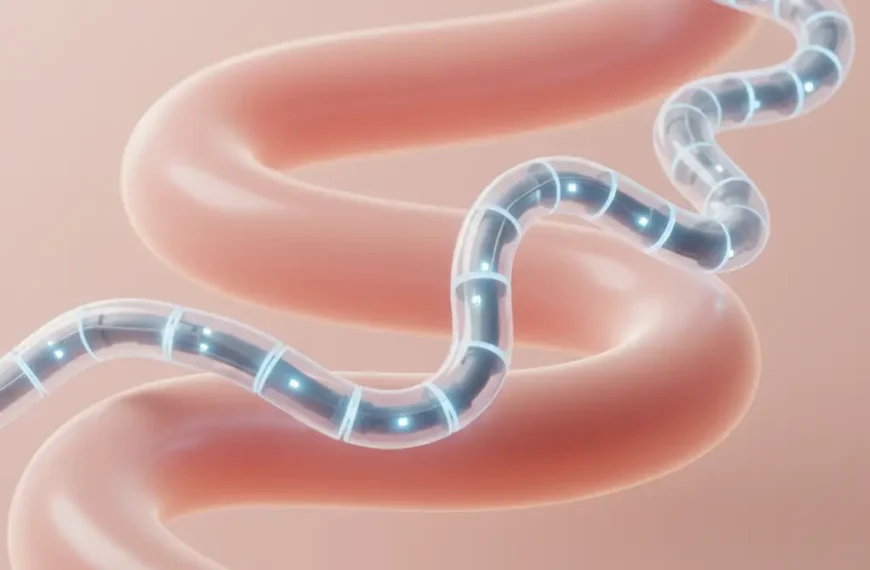
Soft robotic capsules are the evolution of this technology. By integrating miniaturized, compliant actuators, these devices gain the ability to steer, stop, and even propel themselves on demand.
Why Softness is Essential for GI Tract Navigation
The GI tract is a long, winding, and highly sensitive organ. Traditional rigid robots would be too risky; any force applied could easily damage the soft intestinal lining. Compliance is mandatory for safety.
Soft capsules are made from biocompatible, flexible materials, often with external coatings that minimize friction. Their soft bodies allow them to navigate the tight bends and narrow passages of the intestines without causing trauma.
—
🌊 Actuation Explained: Moving with Control
The innovation in soft robotic capsules lies in their ability to generate controlled movement without rigid motors. Since they are micro-scale, they must rely on clever, internal or external forces.
External Magnetic Guidance
Many soft capsules use small, embedded magnetic components. A specialized external machine generates a controlled magnetic field, which is used to push, pull, and precisely steer the capsule through the digestive system.
This allows the physician to stop the capsule at an area of interest—say, a tiny lesion—and hold it in place to capture detailed, high-resolution images or even perform a micro-biopsy.
Internal Actuation (Worm-like Movement)
Some cutting-edge soft capsules employ peristaltic locomotion, mimicking an earthworm’s movement. They use tiny internal actuators (like shape memory alloys or miniature fluidic chambers) to create expansion and contraction waves along the capsule’s body.
This allows the capsule to gently crawl forward against the natural flow of the digestive system, giving the doctor total control over speed and direction inside the GI tract.
—
📸 Beyond Imaging: Therapeutic Potential
Soft robotic capsules are not just advanced cameras; they are platforms that can carry out therapeutic actions at the source of a problem, moving diagnostics into the realm of minimally invasive treatment.
Targeted Drug Delivery
A soft capsule can carry a payload of medication designed to treat localized issues like Crohn’s disease or colon cancer. The doctor steers the capsule to the exact location and triggers the release of the drug, maximizing efficacy while minimizing systemic side effects.
Micro-Biopsies and Sampling
Future soft capsules are being designed with tiny, compliant sampling mechanisms. They could gently take a micro-biopsy of suspicious tissue and securely store it, all without the patient needing sedation or an invasive scope.
This allows for faster, easier tissue analysis in a comfortable outpatient setting, truly transforming preventative care.
—
📝 Notes on Patient Experience and Future Steps
The shift to soft robotic capsules significantly improves the patient experience. The lack of sedation, tubes, and the ability to perform the procedure as an outpatient vastly reduces the stress and cost associated with GI examination.
The key challenge remaining is increasing the reliability and dexterity of the internal actuators. Engineers are working to make these capsules entirely autonomous, capable of navigating and diagnosing issues without constant external human control.
—
| Feature | Soft Robotic Capsule | Traditional Endoscopy |
|---|---|---|
| Invasiveness | Minimal (Swallowing a pill) | High (Insertion of a long tube) |
| Control | Steerable, Stop-on-Demand | High (But requires sedation and skill) |
| Small Intestine Access | Excellent (Reaches entire tract) | Limited (Difficult to reach the full small intestine) |
| Patient Comfort | Very High (Painless, no sedation) | Lower (Requires sedation, discomfort) |
—
✨ A Clearer Picture of Health
Soft robotic capsules are much more than just a novelty; they represent a fundamental improvement in gastrointestinal diagnostics. By making internal examination painless, safe, and easily repeatable, they stand to improve early detection and treatment for millions.
The future of internal medicine is small, smart, and soft, offering patients a completely non-invasive way to gain a clearer picture of their health from within.
 By
By