
🩺 The Evolution of Surgical Tools
For centuries, surgery has primarily involved making incisions to access the body’s interior. While remarkably effective, traditional open surgery can lead to significant trauma, longer recovery times, and increased risk of complications.
The advent of minimally invasive surgery (MIS), using rigid endoscopes and laparoscopic tools, dramatically improved patient outcomes by reducing incision sizes. However, even these tools have limitations due to their stiffness, making navigation through tortuous anatomical pathways challenging and risking damage to delicate tissues.
This is where the ‘magic’ of soft robotics enters the operating room. By embracing flexibility, soft endoscopes and catheters are set to redefine surgical precision and patient safety, offering a gentler touch.
—
🌟 Why Softness Matters in the Body
The human body is an intricate network of soft, delicate tissues, organs, and winding pathways. Introducing a stiff, unyielding instrument into this environment, even a small one, requires extreme caution and skill.
A rigid tool can only be pushed or pulled in a straight line or bent at pre-defined joints. This limits its ability to navigate around obstacles or follow the natural curvature of, say, the colon or blood vessels, without exerting potentially harmful forces.
Soft robots, on the other hand, are inherently compliant. Made from flexible materials like silicone, they can bend, twist, and conform to internal structures, drastically reducing the risk of perforation or damage.
Navigating the Labyrinth: A Gentle Approach
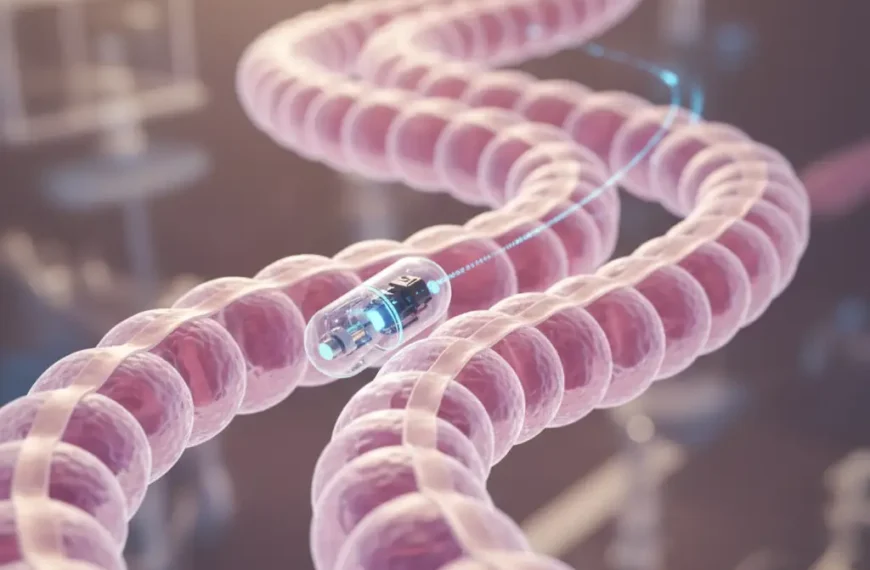
Imagine trying to push a straight, stiff wire through a coiled garden hose. It’s difficult and likely to cause kinks or damage. Now, imagine a flexible, soft tube gently making its way through the same hose.
This analogy illustrates the core advantage of soft endoscopes and catheters. They can gracefully follow the natural curves of the esophagus, intestines, or blood vessels, rather than forcing their way through, leading to a much safer journey inside the patient.
—
🔬 Soft Endoscopes: A Deeper, Safer Look
Endoscopes are vital tools for diagnostic procedures and surgery, allowing doctors to visualize and operate within the body without large incisions. Traditional endoscopes, while flexible, still have rigid sections or limited bending capabilities.
Soft endoscopes take this flexibility to a new level. They are often actuated pneumatically or hydraulically, allowing their entire length to bend and articulate continuously, much like an octopus arm.
This means they can navigate tighter turns, reach previously inaccessible areas, and do so with significantly less force applied to the surrounding tissue. It’s like having a miniature, highly adaptable explorer inside the body.
Benefits in Practice
Consider a colonoscopy: a procedure that uses an endoscope to examine the large intestine. A traditional scope can be uncomfortable and sometimes challenging to maneuver due to the colon’s many turns.
A soft robotic endoscope, however, could gently ‘grow’ or steer itself through these twists and turns, potentially making the procedure less painful for the patient and easier for the clinician. This leads to better patient experience and improved diagnostic capability.
—
💉 Soft Catheters: Precision in the Vascular System
Catheters are thin tubes inserted into the body to deliver medication, drain fluids, or perform diagnostic tests, often within the delicate vascular system. Navigating a catheter through blood vessels, especially to the brain or heart, demands immense skill and precision.
Traditional catheters, while thin, still have a degree of stiffness that can make navigating complex arterial branches risky. Pushing too hard or taking a sharp turn can damage vessel walls, leading to serious complications.
Soft robotic catheters are designed to overcome these challenges. They often incorporate internal fluidic channels or smart materials that allow for precise, controlled steering and even ‘growing’ through vessels without needing external pushing.
Revolutionizing Vascular Interventions
In neurosurgery, for example, a soft catheter could be steered with unprecedented accuracy through the intricate web of cerebral arteries to reach an aneurysm. Its inherent compliance would minimize the risk of vessel perforation.
For cardiac procedures, a soft catheter could offer a safer path to the heart, reducing the trauma to blood vessel walls during insertion and navigation. This ultimately leads to better patient outcomes and reduced recovery times.
—
📈 Pros and Cons: A Balanced View
Like any emerging technology, soft surgical robots come with both exciting advantages and inherent challenges that researchers are actively addressing.
| Advantage | Challenge |
|---|---|
| Reduced Tissue Damage | Complex Control Systems |
| Greater Anatomical Access | Sterilization & Biocompatibility |
| Enhanced Patient Comfort | Durability & Longevity |
| Improved Visualization & Operation | Integration with Existing Tools |
| Intrinsic Safety Features | Cost of Development & Manufacturing |
—
💡 The Future is Flexible: Impact on Patient Care
The impact of soft endoscopes and catheters on patient care is profound. By making procedures less invasive and inherently safer, they promise to reduce recovery times, lower complication rates, and expand access to critical diagnostic and therapeutic interventions.
For patients, this means less pain, shorter hospital stays, and a quicker return to their daily lives. For surgeons, it means having tools that offer unprecedented control and adaptability within the human body.
While still in the early stages of development and clinical adoption, these soft robotic innovations are not just incremental improvements. They represent a paradigm shift, promising a future where surgical ‘magic’ is performed with a gentler, more compliant touch.
 By
By