
🌊 The Ocean’s Final Frontier
The deep ocean remains one of the most mysterious and least explored places on Earth. Its extreme conditions—crushing pressure, pitch darkness, and freezing temperatures—make conventional exploration extremely difficult.
Traditional deep-sea submersibles and rigid robots are complex and require heavy, expensive pressure vessels to protect their electronics and moving parts. These heavy structures are often noisy and intrusive, disturbing the sensitive creatures they are meant to study.
The solution lies not in building stronger metal shells, but in adopting nature’s own design principles: softness, compliance, and bio-inspiration. This shift is opening up a new era of underwater robotics.
—
🐠 The Soft Robotic Fish: Embodying Nature’s Design
The most compelling example of soft robotics in ocean exploration is the soft robotic fish. Instead of propellers and rigid joints, these devices mimic the natural, undulating movement of real fish, such as tunas or manta rays.
They are constructed from soft, flexible materials like silicone and are powered by internal fluidic or electrical actuators that cause their tails or fins to generate fluid, silent thrust. This movement is incredibly energy-efficient and highly maneuverable.
Crucially, their soft, non-metallic nature allows them to approach sensitive marine life without the loud, mechanical disturbances created by propeller-driven vehicles, enabling unprecedented, non-invasive observation.
The Pressure Challenge Overcome
Pressure is the biggest enemy in the deep sea. At depths over 10,000 meters, the pressure is equivalent to the weight of a heavy SUV resting on your fingertip. Traditional robots must battle this force with thick metal hulls.
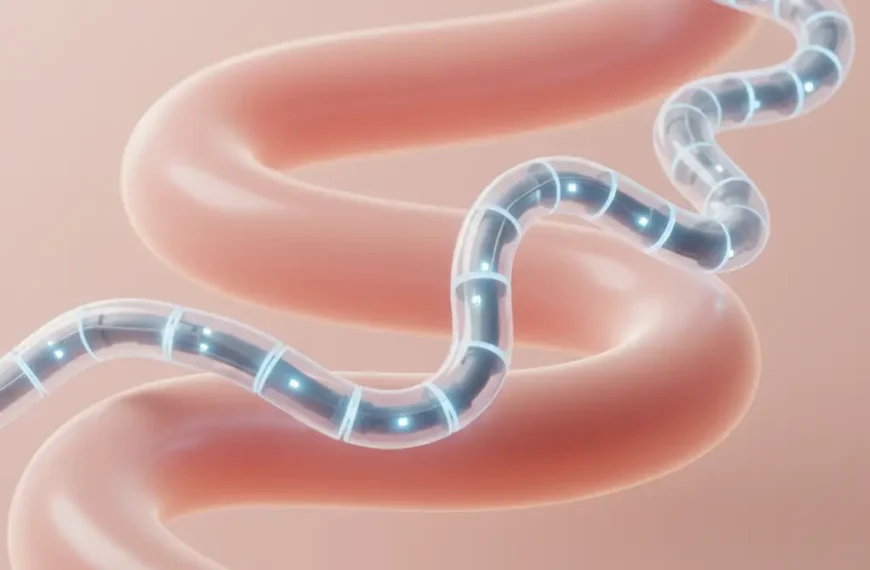
Soft robots, especially those designed with fluidic actuators, manage pressure differently. By incorporating their electronics into flexible, pressure-tolerant silicone bodies, they essentially embrace the pressure rather than fighting it.
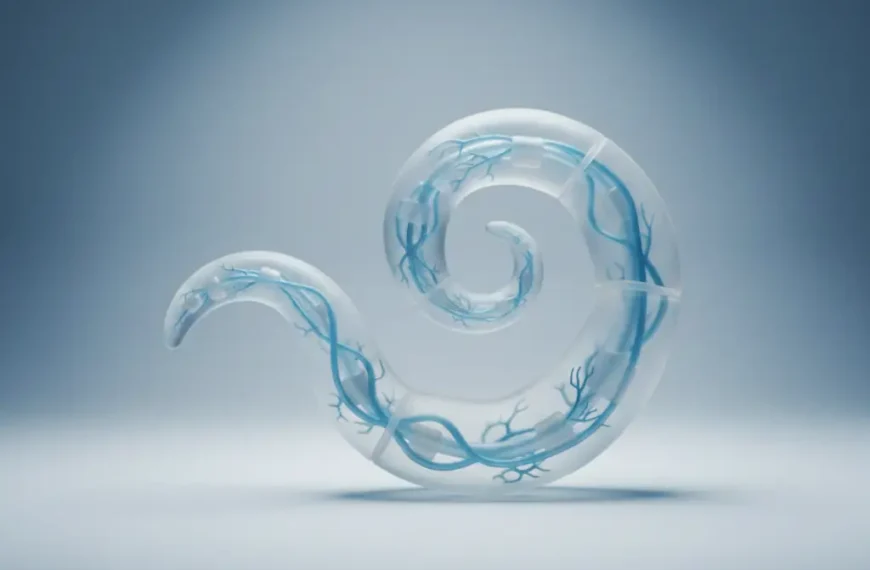
Some designs even utilize soft lithography to encapsulate electronics in gelatinous matrices, mimicking the pressure equalization found in deep-sea creatures like the snailfish.
A soft robot’s primary defense against crushing pressure is equalization, not resistance. By allowing the soft materials to compress slightly and ensuring no air gaps exist, the internal and external pressures remain balanced, protecting sensitive components.
—
🐙 The Mechanics of Silent Swimming
How does a soft robot move so effectively without a propeller? The answer lies in replicating the body mechanics of natural swimmers, specifically through controlled, continuous deformation.
Actuation Methods in the Deep
Deep-sea soft robots often use a few specialized actuation techniques compatible with high pressure:
- Fluidic Muscle Actuators: Small, internal pouches expand and contract using pressurized fluid (often water-based), causing the tail or body to bend and create propulsion.
- Dielectric Elastomers (DEs): These ‘artificial muscles’ use electricity to change shape. In water, specialized, robust encapsulation is needed, offering compact, silent, and highly efficient movement.
The resultant motion is an elegant, wave-like oscillation—a natural form of movement that maximizes hydrodynamic efficiency while minimizing noise. This silent swimming is crucial for studying sound-sensitive species like sperm whales.
—
🔬 Beyond Fish: Exploring Other Ocean Life
While the soft robotic fish is a prominent example, engineers are drawing inspiration from many other marine organisms to develop specialized soft robots for specific tasks.
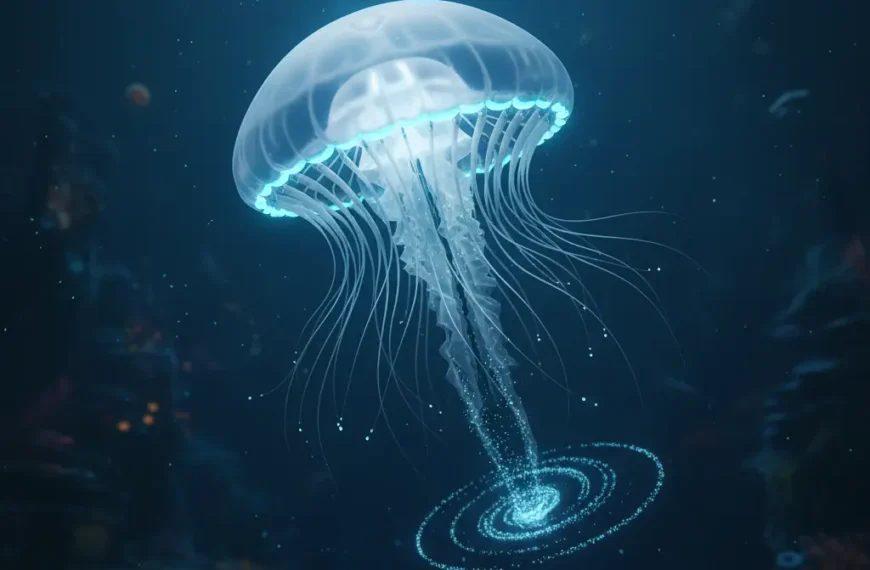
Jellyfish Robots: These soft systems mimic the bell-like pulsation of jellyfish, which is a highly efficient way to move and sample water without disturbing delicate plankton or larvae. Their slow, graceful movements are perfect for environmental monitoring.
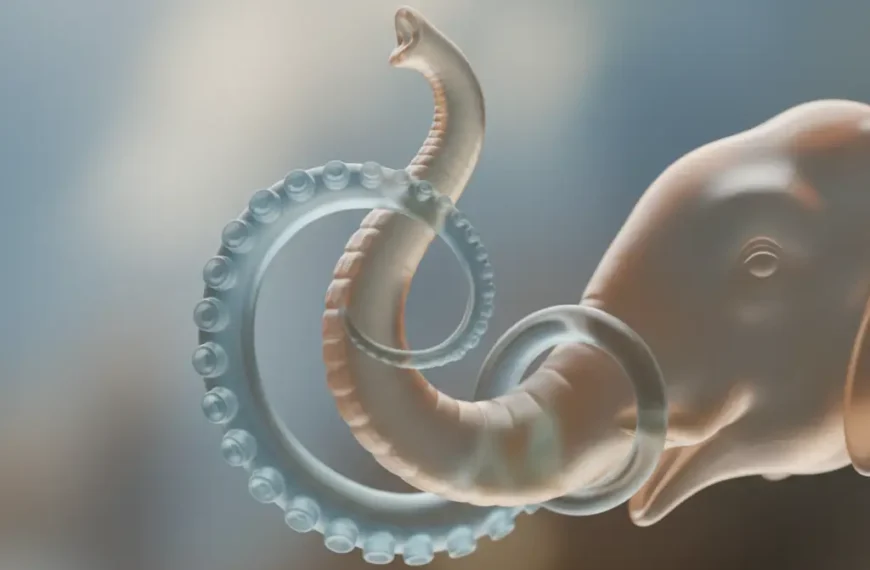
Octopus Grippers: Soft, sucker-covered grippers inspired by octopus arms can gently manipulate fragile coral or recover delicate archaeological artifacts from the seabed without damaging them, a feat impossible for rigid metal claws.
The goal is to create a toolkit of highly specialized, bio-inspired robots, each perfectly adapted to its specific deep-sea task, mirroring the incredible diversity of ocean life itself.
—
🔭 The Future of Underwater Robotics
Soft robotics holds the key to unlocking the secrets of the deep. By being silent, resilient, and compliant, these robots can penetrate harsh environments for extended periods and collect data that traditional technology cannot.
We can look forward to seeing entire schools of soft robotic fish monitoring massive swaths of the ocean, autonomously collecting data on climate change, pollution, and biodiversity.
The deep sea remains the last true frontier for exploration, and the soft, bio-inspired robot is proving to be our most capable and respectful guide into that silent, pressurized world.
 By
By